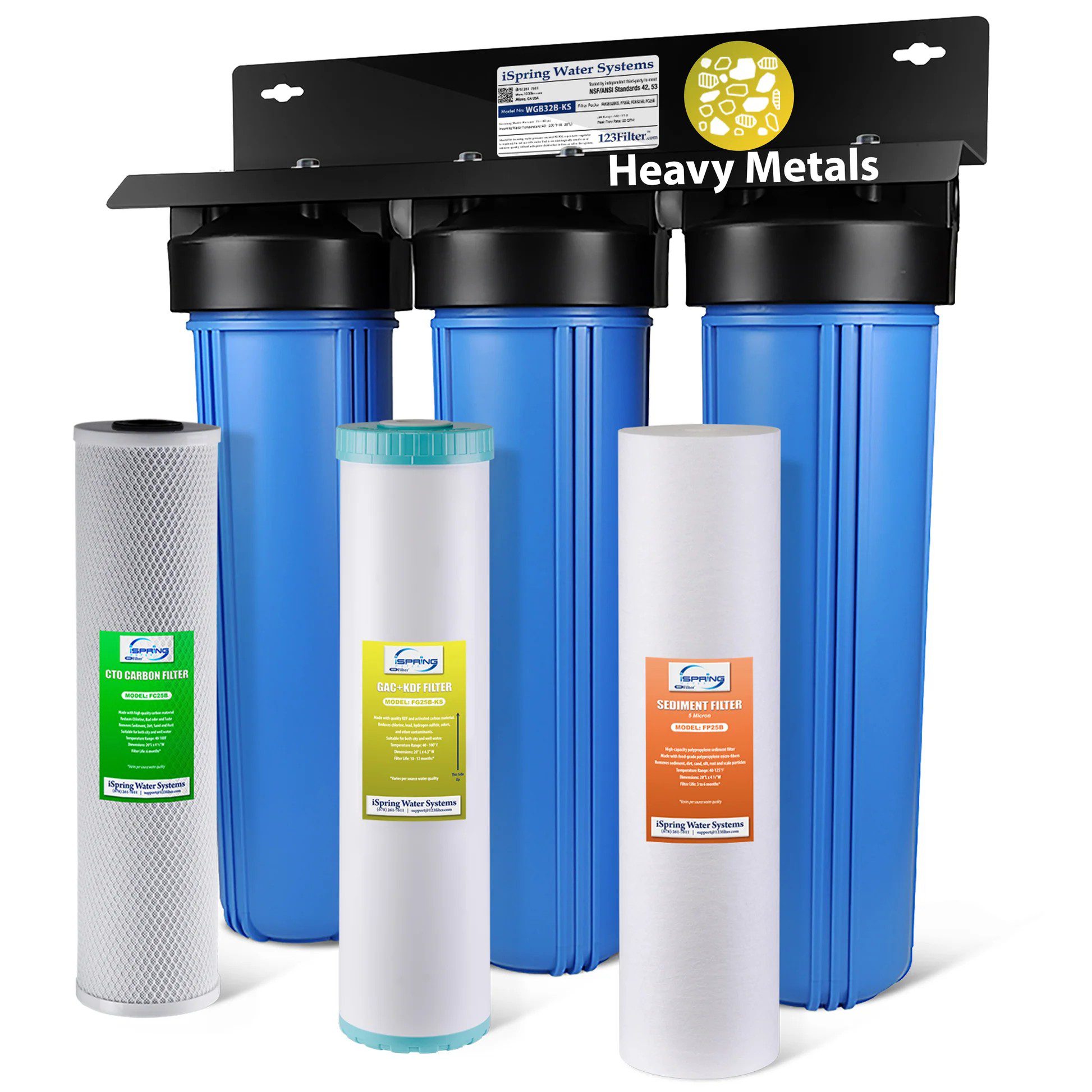
What Is a Water Filter For Whole House?
A water filter for whole house is a treatment system installed on the main water line, so every tap, shower and appliance receives treated water. Most combine a sediment filter with activated carbon to reduce chlorine, odor and particles.
You will also see it called a point-of-entry (POE) system, a whole-home filtration system or a main line filter. The idea is the same: treat the water once, where it enters the building, instead of at each faucet.
It is not a cure-all. A filter removes some things, a softener handles others, and a few contaminants need treatment at the drinking tap. The rest of this guide helps you work out which combination your home actually needs.
Why People Install One
Most homeowners start with a symptom. The water smells like a swimming pool, the shower leaves skin dry, or white scales build up on faucets and in the kettle.
Others are reacting to something specific: a bad lab result on a private well, a utility notice, a new baby, or a water heater that failed early from scale.
Typical reasons include:
- Reducing chlorine and chloramine taste and odor
- Catching sediment, silt and rust flakes before they reach appliances
- Protecting the water heater, dishwasher and washing machine
- Treating iron, manganese and rotten-egg (hydrogen sulfide) smell on well water
- Improving shower and laundry water
How a Water Filter For Whole House Works
Most water filter for whole house systems treat water in stages. Each stage targets a different type of problem, and the order matters.
- Sediment pre-filter traps sand, silt and rust. Common ratings run from 50 microns down to 5.
- Activated carbon (granular activated carbon, or GAC) adsorbs chlorine, many volatile organic compounds (VOCs), and taste and odor compounds.
- Specialty media such as KDF, ion exchange resin or oxidizing media handles specific problems like iron or sulfur.
- Disinfection, usually ultraviolet (UV), is added on wells or any supply with microbial risk.
Sediment goes first because it protects everything downstream. A carbon bed that clogs with silt loses flow and performance quickly.
Types of Water Filter For Whole House
The term “water filter for whole house” covers several different technologies. Here is how they compare.
| Type | Best for | Does not handle | Upkeep |
| Sediment filter | Wells, older pipes, protecting other stages | Chlorine, dissolved chemicals | Cartridge swap every 3 to 12 months |
| Carbon filter (GAC or catalytic) | City water chlorine and chloramine, taste, odor | Hardness, most microbes | Media lasts years in tank systems; cartridges change more often |
| Salt-based softener (ion exchange) | Hard water and scale | Chlorine, bacteria | Salt refills; occasional resin service |
| Salt-free conditioner (TAC) | Reducing scale without salt | Does not remove hardness | Low |
| Iron and sulfur filter | Rust stains, rotten-egg smell | Bacteria, most chemicals | Backwashing; media or chemical refresh |
| UV sterilizer | Bacteria, viruses, cysts | Chemicals, particles | Lamp replaced about yearly |
| Whole house reverse osmosis | Very high dissolved solids | Practical for few homes | High cost, water waste |
What a Water Filter For Whole House Does Not Remove
This is where marketing and reality often part ways. No single filter handles everything.
- Hardness: carbon does not remove calcium and magnesium. You need a softener or a scale conditioner.
- Bacteria and viruses: standard filters are not a safe-water guarantee. UV or other certified disinfection is needed.
- Lead: it often comes from household plumbing at the tap. Use a point-of-use filter certified for lead reduction.
- PFAS, nitrate, arsenic and fluoride: these are generally best handled with reverse osmosis or specific media at the drinking tap, often alongside professional advice.
So does a whole house filter remove fluoride? In general, no. Standard carbon and sediment stages do not reduce it meaningfully.
5 Best water filter for whole house
1. Aquasana Rhino EQ-1000
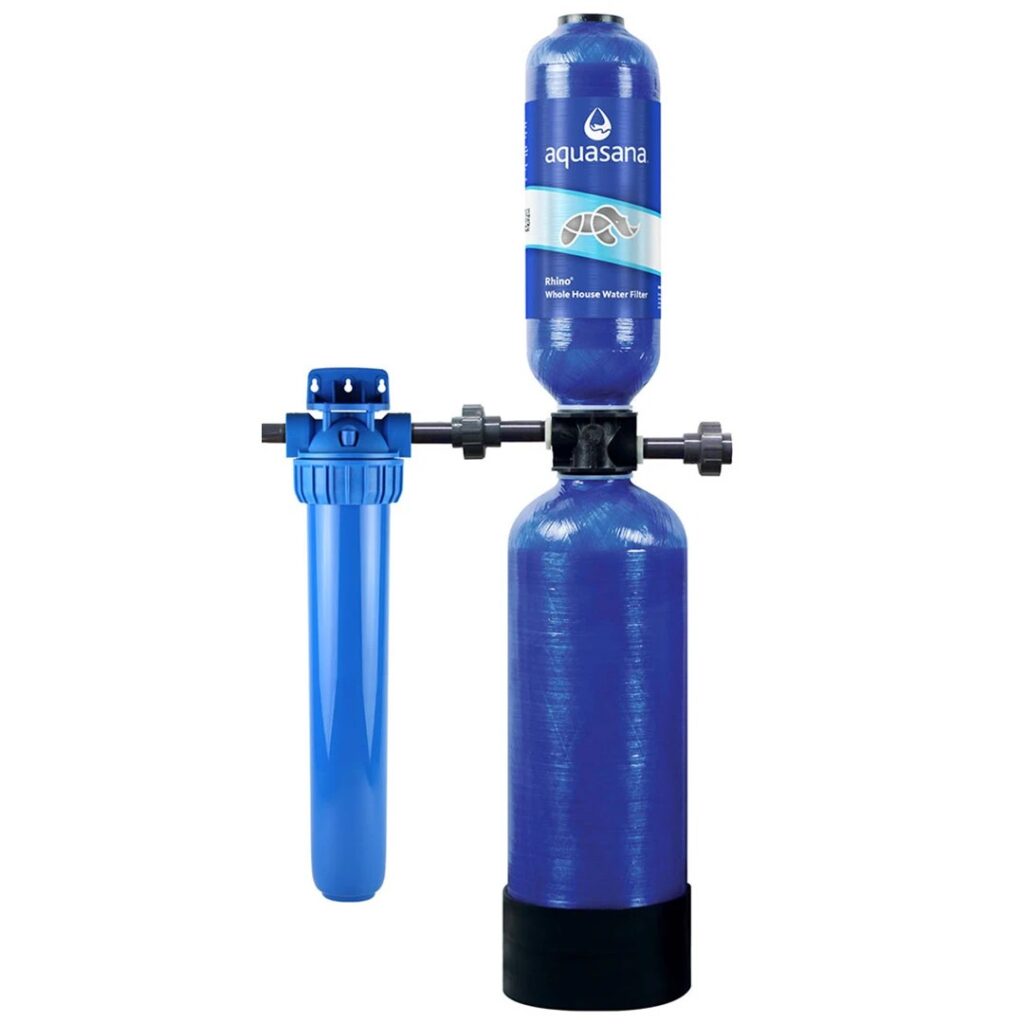
This is the pick for most city-water homes. It is a tank-based system that pairs sediment and carbon filtration, and one review rates it for up to 600,000 gallons of treatment across the whole house. That long media life is its main advantage, since you avoid changing cartridges several times a year. It targets chlorine, sediment, taste and odor, and it does not soften water. If you also have scales on fixtures, you’ll need to add a softener or conditioner. It costs more upfront than cartridge systems, so it suits homeowners planning to stay put for several years.
2. Express Water Heavy Metal 3-Stage
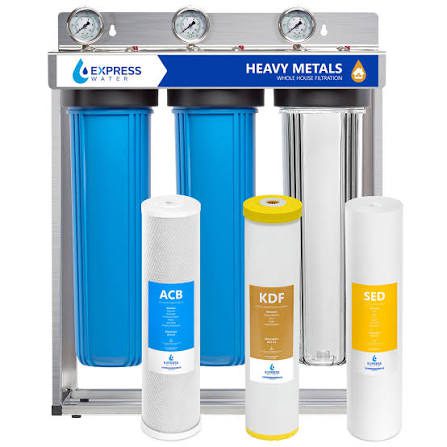
This is the pick if you want a three-stage cartridge setup in one frame. Bob Vila names it best overall, and the listing says it reduces heavy metals, scale, chloramine, chlorine, PFAS, lead and arsenic. Treat those claims cautiously and check its NSF/ANSI certifications yourself, since a listing is not proof. It includes a bypass valve, so you can change filters without shutting off water to the whole house, and a first install takes about three to four hours. Because it uses cartridges, expect regular replacements and watch pressure in a large household.
3. iSpring WGB32B 3-Stage
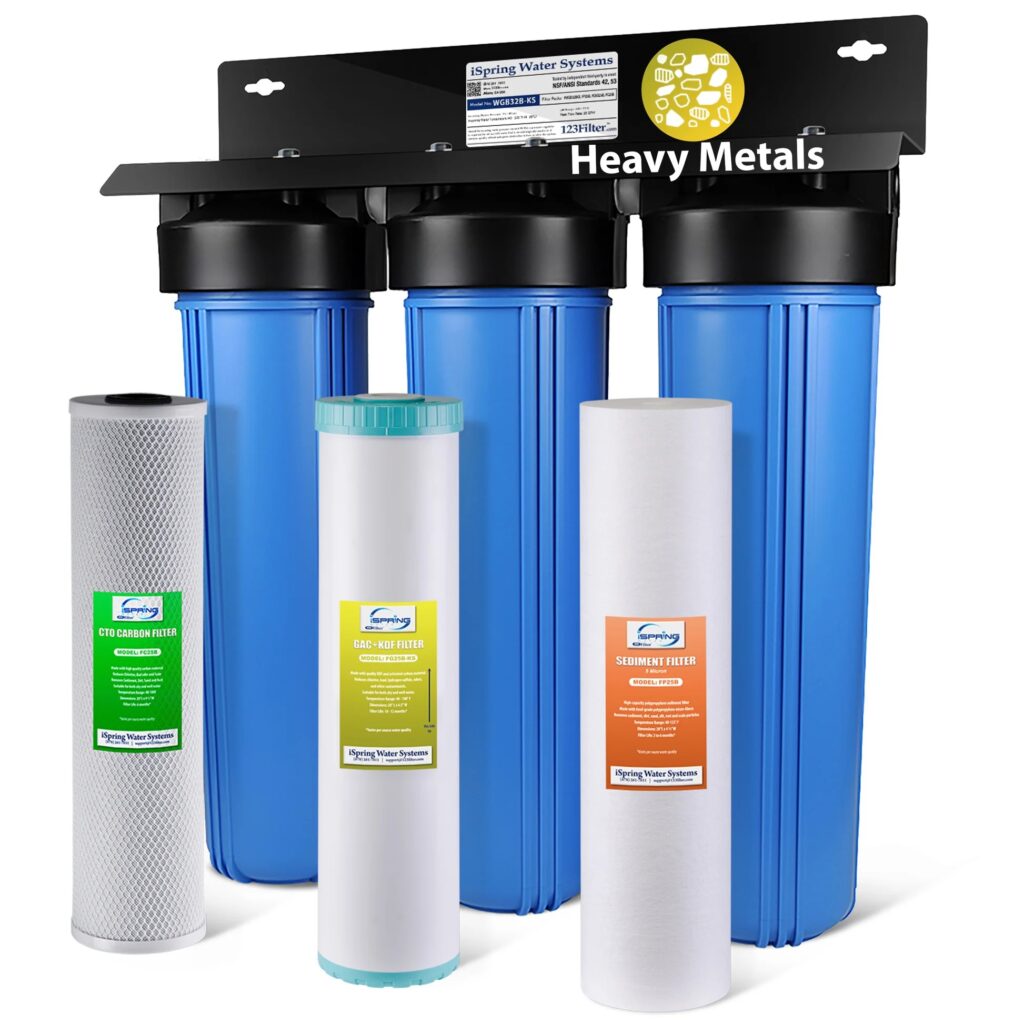
This is the budget-friendly cartridge option. Bob Vila lists it as the best 3-stage whole-house filter, and its multiple stages let it handle sediment and chlorine together. It works well for smaller households and DIY installers who want good value. The trade-off is that you’ll replace cartridges on a schedule, and you should check its flow rating against your peak demand. A three-stage cartridge system can cut pressure if it is undersized for your home.
4. Aquasana Whole-House Well Water Filter System
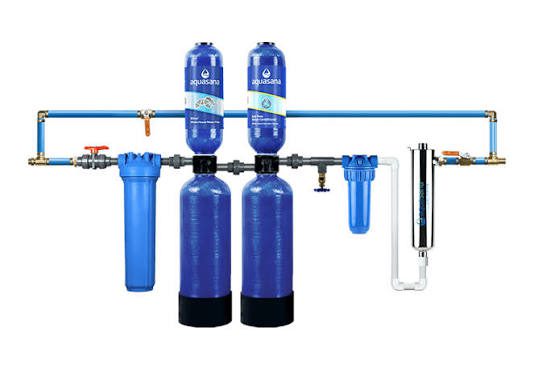
This one is built for private wells. Bob Vila’s comparison lists it as using carbon and KDF filtration at about 7 GPM, with a moderate installation difficulty. It helps with sediment and some well-water problems, but wells vary widely. Most also need a lab test and often iron or sulfur treatment and UV disinfection if bacteria are present. Since the EPA does not regulate private wells, the test results should decide what you add around this unit.
5. 3M Aqua-Pure Whole-House Sanitary Quick Change
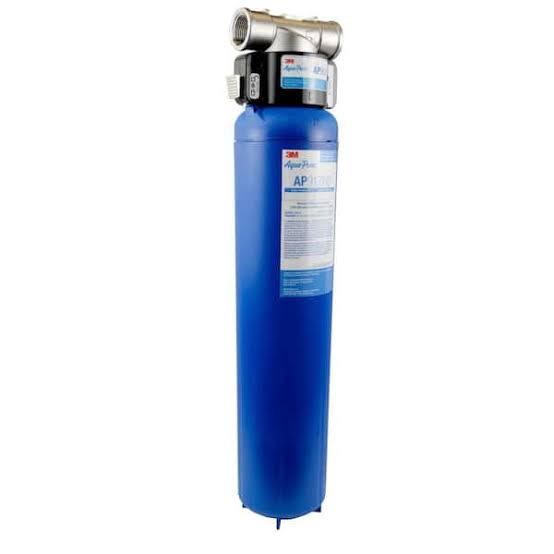
This is the simple, low-fuss choice. It is a single-stage system with quick-change cartridges, and Bob Vila lists its flow at 10 to 20 GPM with easy installation. That high flow rate means little pressure loss, which suits larger homes or anyone worried about weak showers. It is best when your main issue is sediment or basic chlorine reduction. It will not handle hardness, iron or microbes, so it works as a clean starting point you can build on later.
Installation: DIY or Professional?
A water filter for whole house is installed on the main line after the water meter (or after the pressure tank on a well) and before the water heater. The location should be indoors, protected from freezing, with room to service it.
A competent DIYer comfortable with pipe cutting and fittings can install a basic cartridge system in an afternoon. Hire a licensed plumber or water treatment specialist if you have a softener, UV system, a drain connection, or a local permit requirement.
Basic Installation Steps
- Shut off the main supply and drain the line.
- Mount the system on a wall or stand, following the flow arrows.
- Cut into the main line and fit the inlet and outlet connections.
- Add shutoff and bypass valves so you can service the filter without cutting off water to the house.
- Install cartridges or media, then open the supply slowly and check for leaks.
- Flush the system as the manufacturer directs, especially after adding carbon.
- Record the install date and set a reminder for the first service.
Maintenance Checklist
A neglected filter stops working and can slow your water flow. Keep a simple routine.
- Write the install date on the housing
- Check pressure gauges monthly
- Replace sediment cartridges on schedule, and sooner with well water
- Service carbon media according to the manufacturer
- Replace UV lamps about every 12 months
- Refill salt if you have a softener
- Retest water yearly or whenever taste or smell changes
Old cartridges can also become a site for bacterial growth if left in place far past their life, which is another reason to stick to the schedule.
Whole House Filter vs. Softener vs. Reverse Osmosis
These three are often confused, but they solve different problems.
| water filter for whole house | Water softener | Reverse osmosis | |
| Main job | Chlorine, sediment, taste, odor | Remove hardness | Remove dissolved contaminants |
| Where it goes | Main line | Main line | Usually under one sink |
| Needs salt | No | Yes (salt-based) | No |
| Wastewater | Minimal | Some during regeneration | Yes |
Many homes use a filter and a softener together, plus a small RO system at the kitchen tap for drinking water.
FAQs About Water Filter For Whole House
Q: Is a water filter for whole house worth it?
It is worth it when testing shows a problem you want solved at every tap, such as chlorine, sediment or iron. If your water is clean and tastes fine, a smaller filter at the drinking tap may be enough.
Q: Does a water filter for whole house reduce water pressure?
It can, if the unit is undersized or the cartridge is clogged. Choose a system rated above your peak flow, match the pipe size, and replace filters on time.
Q: Is a water filter for whole house the same as a water softener?
No. A water filter for whole house removes particles and chemicals such as chlorine. A softener removes the minerals that cause hardness. Many homes need both.
Q: Do I need a water filter for whole house with city water?
Not necessarily. City water is treated and monitored, but many people add carbon filtration for taste, odor and shower comfort.
Q: Will a water filter for whole house remove lead?
Usually not. Lead often enters from household plumbing, so use a point-of-use filter certified for lead reduction on drinking taps.
Conclusion: Water Filter For Whole House
The right water filter for whole house is the one matched to your water, your pipes and your household’s flow demand. Testing comes first, sizing comes second, and the brand comes last.
Start by pulling your water report or booking a lab test. Name the problem, match it to the right technology, check the certifications, and size the water filter for whole house system before you compare prices or installers.
Do that, and you will end up with cleaner water at every tap and a system that does not become a maintenance headache.
These information are gathered from different surveys, medical tests and tech giants like google, wikipedia and more. Our top priority is to provide you valuable information.
For More Details About Different Water Filters Click Here