What Is an Activated Carbon Water Filter?
An activated carbon water filter passes water through porous carbon that traps chlorine, odors and many organic chemicals on its surface. An activated carbon water filter improves taste and reduces certain contaminants, but it does not remove fluoride, nitrate, dissolved salts or hardness, and it is not a disinfectant.
That short answer matters, because carbon is the most common filtration media in homes, offices, cafes and municipal plants, and also the most oversold. Used for the right job, it is excellent. Used for the wrong one, it gives a false sense of safety.
The carbon itself is usually made from coconut shell, bituminous coal, wood or peat. It is heated and “activated” with steam or chemicals, which opens up millions of microscopic pores. A single gram can hold a surface area measured in hundreds of square meters, which is what gives it its grip on contaminants.
You may also see it called an activated carbon water filter, a charcol filter or a GAC filter. In water treatment, these terms mostly describe the same family of products.
Why Carbon Filtration Matters
Public water is disinfected with chlorine or chloramine to keep it microbiologically safe. That protection comes with side effects: a pool-like smell, a flat taste, and disinfection by-products such as trihalomethanes (THMs), which form when disinfectant reacts with organic matter.
Carbon is one of the few low-cost technologies that reduces all three. It also reduces many volatile organic compounds (VOCs) and some pesticides, which is why it appears in everything from pitcher cartridges to industrial treatment trains.
For businesses, the value is practical. Chlorine damages reverse osmosis (RO) membranes, and it affects coffee, tea and ice. A carbon pre-filter protects equipment and keeps flavor consistent.
How an Activated Carbon Filter Works
The core mechanism is adsorption, not absorption. Contaminant molecules stick to the carbon surface instead of soaking into it. For chlorine, there is a second effect: a catalytic reaction at the carbon surface converts it into harmless chloride.
Here is what happens as water moves through a cartridge:
- Water enters the housing and flows through the carbon bed or porous block.
- Organic molecules are drawn into the micropores and held there by weak molecular forces.
- Chlorine reacts at the surface and is reduced.
- Treated water exits, and the carbon slowly fills with what it has captured.
When the surface sites are full, the carbon is exhausted and contaminants begin to pass through. This is called breakthrough.
What Affects Performance
Four factors decide how well a carbon filter performs:
Contact time. Engineers call it empty bed contact time (EBCT). Slower flow through more carbon means better removal.
Carbon quality. Pore structure and particle size matter. A lab measure called iodine number is often used as a rough indicator of adsorption capacity.
Water conditions. Temperature, pH and the concentration of contaminants all change results.
Pre-treatment. Sediment clogs pores, which is why many systems add a sediment pre-filter.
This is also why a faucet-mount filter, which sees fast flow, usually performs differently from an under-sink carbon block, which gives water more time in contact with the media.
What Activated Carbon Water Filters Removes, and What It Does Not
This is the section most buyers need, and the one most product pages blur. Carbon is strong on taste, odor and many organic chemicals. It is weak or useless on dissolved minerals and microbes.
| Contaminant | Carbon performance | Notes |
| Chlorine (taste and odor) | Excellent | The core strength |
| Chloramine | Moderate to good | Needs catalytic carbon and adequate contact time |
| THMs and many VOCs | Good | Look for certified reduction claims |
| Pesticides and herbicides | Good for many | Varies by compound |
| PFAS (PFOA, PFOS) | Variable | Only trust products certified for these specific compounds |
| Lead | Only with specific media | Requires a lead-reduction certification |
| Cysts (Giardia, Cryptosporidium) | Only fine carbon blocks, certified | Granular carbon is not designed for this |
| Bacteria and viruses | Not reliable | Needs UV, ultrafiltration, boiling or disinfection |
| Fluoride | Poor | Use RO, activated alumina or bone char |
| Nitrate | None | Use RO or ion exchange |
| Dissolved salts (TDS) | None | Use RO or distillation |
| Hardness (calcium, magnesium) | None | Use a softener or scale inhibitor |
A Warning About “99%” Claims
Some marketing pages claim carbon removes around 99% of bacteria, germs, microplastics and metals. Treat that kind of claim with caution. Removal depends on the exact product, the contaminant and the test conditions, and a general claim without a named standard tells you very little.
A reliable claim names the contaminant, the percentage reduction and the certification behind it.
Types of Activated Carbon Filters
Not all Activated Carbon Water Filters are built the same. The format of the carbon changes flow rate, filtration fineness and what the product can credibly claim.
Granular Activated Carbon (GAC)
Loose granules packed in a cartridge or tank. GAC allows high flow and low pressure drop, which makes it popular in pitchers and whole-house tanks. The weakness is channeling: water can carve paths through the bed and bypass much of the carbon.
Carbon Block
Fine carbon powder compressed with a binder into a solid block. Water is forced through a dense structure, so contact is more consistent and the block also acts as a mechanical filter. Certified carbon blocks are the usual route to lead, VOC and cyst reduction claims. The trade-off is lower flow and a faster clog if the water is sediment-heavy.
Sintered and Composite Carbon Blocks
A sintered block is fused rather than glued, and some versions carry a fine micron rating that can physically trap cysts and larger particles. They are common in premium under-sink and countertop units.
Catalytic Carbon
Specially treated carbon built to break down chloramine and hydrogen sulfide odor more effectively than standard carbon. If your water utility uses chloramine, this is the type to look for.
Activated Carbon Fiber and Powdered Carbon
Activated carbon fiber (ACF) offers fast adsorption in compact formats. Powdered activated carbon (PAC) is mainly used by municipal plants for seasonal taste and odor events, not in household filters.
Coconut Shell vs Coal-Based Carbon
Coconut shell carbon has a higher share of very fine micropores, which suits drinking-water taste and small organic molecules. Coal-based carbon, including bituminous grades, has a broader pore range and is common in industrial and larger-volume systems. Neither is automatically better. Certified performance matters more than raw material.
Chlorine or Chloramine? Check Before You Buy
This one detail causes more wrong purchases than any other. Chlorine dissipates and is removed easily by standard carbon. Chloramine, a chlorine and ammonia compound, is more stable and needs catalytic carbon and longer contact time.
To find out which your supplier uses, read your annual water quality report. In the US this is the Consumer Confidence Report (CCR) issued under US EPA rules. Other regions publish similar reports through the local water company or regulator.
If the report lists chloramine, buy a filter that explicitly states chloramine reduction.
Standards and Certifications to Look For
Certification is the best evidence a filter does what it says. Independent bodies such as NSF International, the Water Quality Association (WQA) and IAPMO test products against ANSI-recognized standards.
NSF/ANSI 42: aesthetic effects such as chlorine taste and odor.
NSF/ANSI 53: health-related contaminants such as lead, certain VOCs and cysts.
NSF/ANSI 401: selected emerging compounds, including certain pesticides and pharmaceuticals.
NSF/ANSI 58: reverse osmosis systems, often paired with carbon stages.
The practical rule: if you only want better taste, a standard 42 claim is enough. If you care about lead, VOCs, cysts or PFAS, look for a 53 or 58 claim that lists that exact contaminant.
For reference points on what is considered safe, buyers often look to US EPA maximum contaminant levels, the WHO Guidelines for Drinking-water Quality, and in Europe the EU Drinking Water Directive. A filter does not replace compliant municipal water, but it can add a layer for specific concerns.
Which Format Fits Your Situation?
| Format | Best for | Limits |
| Pitcher | Renters, one or two people | Slow, frequent cartridge changes |
| Faucet-mount | Easy installation, on-demand water | Short contact time, fit varies |
| Under-sink carbon block | Kitchen drinking and cooking water | Needs installation space |
| Refrigerator filter | Water and ice dispensers | Replace on schedule or taste suffers |
| Whole-house tank | Chlorine in showers and every tap | Needs correct flow sizing and periodic media service |
| Commercial inline cartridge | Cafes, restaurants, RO pre-filters | Must match equipment flow and warranty needs |
Shower filters sit in a gray area. Hot water and very short contact time limit how much a carbon cartridge can do, so judge their claims carefully.
How to Choose: A Simple Decision Path
Work through these steps in order.
- Define the problem. Taste and smell, a specific health contaminant, or protecting equipment?
- Get your water data. Read your water quality report, or lab-test private well water.
- Check chlorine vs chloramine. Choose catalytic carbon for chloramine.
- Match certification to the goal. Standard 42 for taste, 53 or 58 for named health contaminants.
- Pick the format. Use the table above, based on where you need filtered water.
- Calculate running cost. Compare cost per gallon or liter, not sticker price.
- Decide if carbon is enough. If your water has microbial risk, high TDS, nitrate or fluoride concerns, add UV, ultrafiltration or RO.
5 Activated Carbon Water Filters
1. Brita Standard Water Filter Replacement
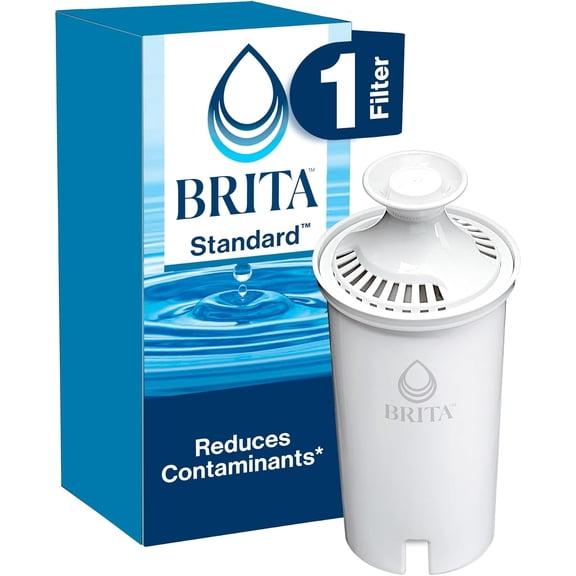
The Brita Standard Water Filter Replacement uses activated carbon and ion-exchange technology to improve drinking water quality by reducing chlorine taste and odor, as well as certain impurities such as copper, mercury, and cadmium. It is designed for compatible Brita water pitchers and dispensers, making it a convenient and affordable option for everyday household water filtration.
2. Brita Elite Replacement Water Filter
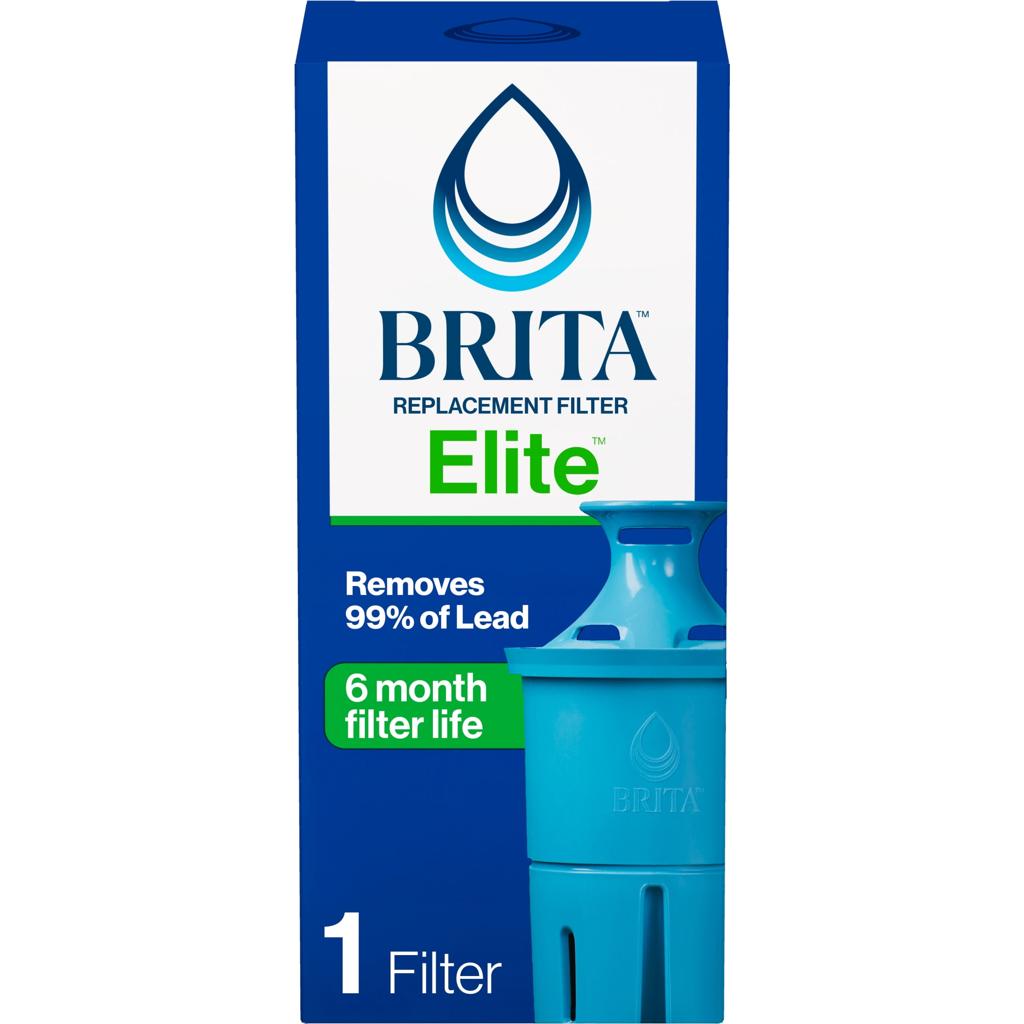
The Brita Elite Replacement Water Filter combines activated carbon filtration with additional filtration technology to reduce a wide range of contaminants, including lead, chlorine taste and odor, and other impurities. It offers longer filter life than standard Brita filters and is suitable for households looking for improved drinking water quality and convenient pitcher-based filtration.
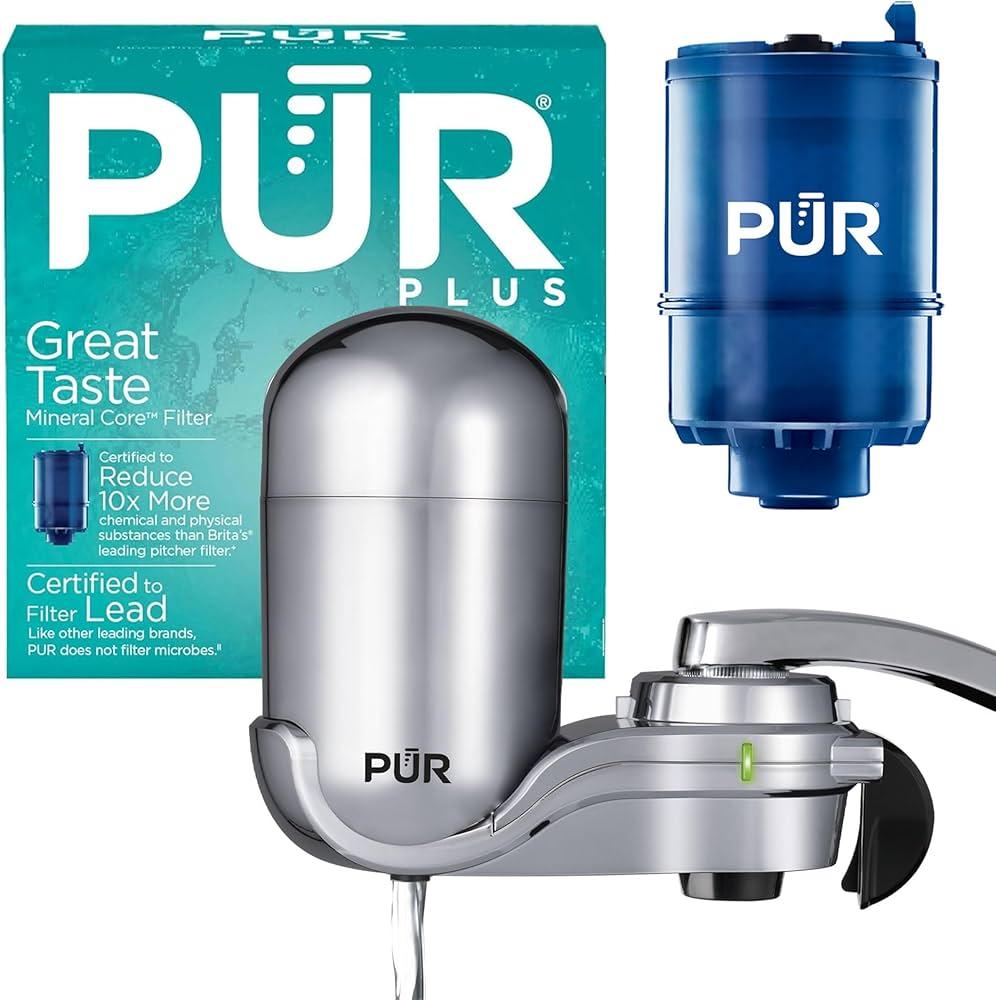
3. PUR PLUS Faucet Mount Replacement Filter
The PUR PLUS Faucet Mount Replacement Filter uses activated carbon-based filtration technology to improve tap water taste and reduce chlorine and selected contaminants, including lead when used in compatible certified systems. It attaches to a compatible PUR faucet filtration unit and provides convenient filtered water directly from the kitchen tap without requiring a separate water pitcher.
4. Aquasana Claryum 3-Stage Under Sink Water Filter
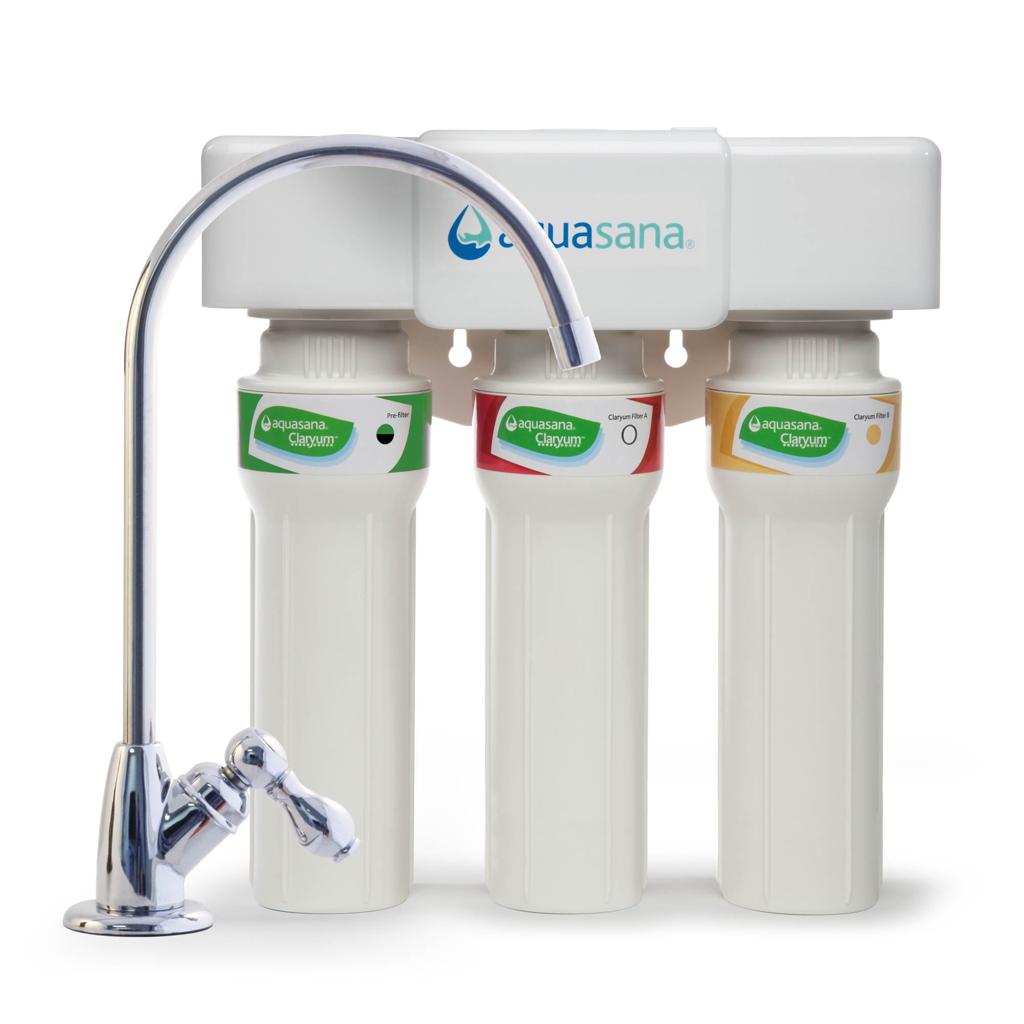
The Aquasana Claryum 3-Stage Under Sink Water Filter uses activated carbon alongside other filtration media to reduce chlorine, lead, and numerous other contaminants. Its multi-stage filtration design helps improve water taste, odor, and overall quality while providing filtered drinking water directly through a dedicated faucet. It is a practical solution for households seeking an under-sink filtration system.
5. ProOne Big+ Gravity Water Filter
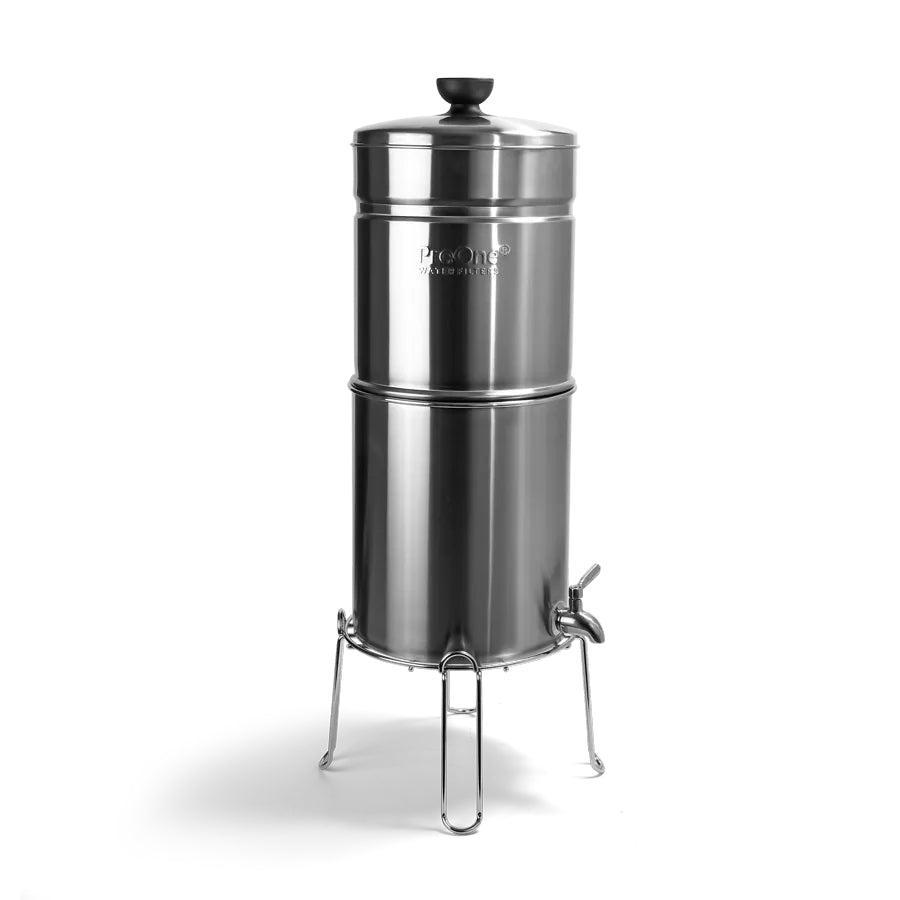
The ProOne Big+ Gravity Water Filter is a countertop filtration system designed to purify drinking water without electricity or direct plumbing connections. Its filter elements use advanced filtration media, including carbon-based technology, to reduce selected contaminants and improve water taste. Its gravity-fed design makes it suitable for household use, emergency preparedness, and locations where conventional water filtration systems are less practical.
What Does It Really Cost?
Prices vary by country, brand and retailer, so treat these as rough ranges and verify locally.
| Format | Typical upfront cost (USD, approximate) | Ongoing cost |
| Pitcher | $20 to $50 | Cartridges every couple of months |
| Faucet-mount | $20 to $40 | Cartridges every few months |
| Under-sink | $80 to $400 | Annual or twice-yearly cartridges |
| Whole-house | $300 to $1,500 and up | Media or cartridge replacement over years |
The Cost-Per-Gallon Method
Divide the cartridge price by its rated capacity. As an illustration only, a $40 cartridge rated for 750 gallons works out to roughly 5 cents per gallon.
Then check the time limit. Many cartridges must be replaced after a set number of months even if the volume rating has not been reached, so use whichever limit comes first.
Hidden costs to include: installation, replacement housings or o-rings, and a water test if you are on a private well.
Installation, Maintenance and Replacement
- Shut off the cold water supply valve.
- Mount the filter bracket under the sink.
- Connect the inlet to the cold line and run the outlet to the filter faucet or tap.
- Flush the new cartridge for the time the manufacturer specifies.
- Check every connection for leaks.
- Use the cold line only. Hot water can reduce carbon performance and may exceed the temperature rating of the cartridge.
Replacement Intervals
These are typical manufacturer ranges, not rules. Always follow the label for your product.
| Filter | Typical replacement |
| Pitcher cartridge | About every 2 months |
| Faucet-mount | Every 2 to 3 months |
| Under-sink carbon block | Every 6 to 12 months |
| Refrigerator filter | About every 6 months |
| Whole-house media | Several years, depending on use and chlorine level |
Signs Your Filter Is Exhausted
- Chlorine taste or smell returns
- Water flow slows noticeably
- Cloudiness or odd tastes appear
- The cartridge has passed its time or volume limit
The tricky part is that carbon gives no clear warning when it saturates. Taste is a rough guide, but contaminants without taste or odor, such as lead, will not announce themselves. Rely on the schedule, not your palate.
Maintenance Checklist
- Record the install date on the cartridge or in your calendar
- Replace by time or volume, whichever comes first
- Flush after any long period of non-use
- Sanitize the housing at changes if the manufacturer advises
- Retest water if you filter for a health-related contaminant
Carbon vs Reverse Osmosis and Other Options
Carbon and RO solve different problems, and many good systems use both. Carbon handles chlorine and organics and keeps beneficial minerals. RO removes dissolved salts, nitrate, fluoride and many metals, but costs more and discharges wastewater.
| Need | Best fit |
| Chlorine taste and odor | Activated carbon |
| Dissolved solids, nitrate, fluoride | Reverse osmosis |
| Bacteria and viruses | UV or ultrafiltration, plus carbon for taste |
| Hard water scale | Water softener or scale inhibitor |
| Fluoride or arsenic (targeted) | Activated alumina or bone char |
| Everything above | Multi-stage: sediment, carbon, RO, UV |
In a multi-stage system Activated Carbon Water Filter typically sits early to protect RO membranes from chlorine, and sometimes again at the end as a polishing stage for taste.
Conclusion: Activated Carbon Water Filter
An activated carbon water filter is one of the most cost-effective ways to improve tap water. It excels at chlorine, taste, odor and many organic chemicals, and it keeps healthy minerals in the water.
Activated Carbon Water Filter is not a complete purifier. If your concerns include bacteria, nitrate, fluoride, high TDS or hardness, carbon should be one stage in a larger system, not the whole answer.
These information are gathered from different surveys, medical tests and tech giants like google, wikipedia and more. Our top priority is to provide you valuable information.
For More Details About Different Water Filters Click Here