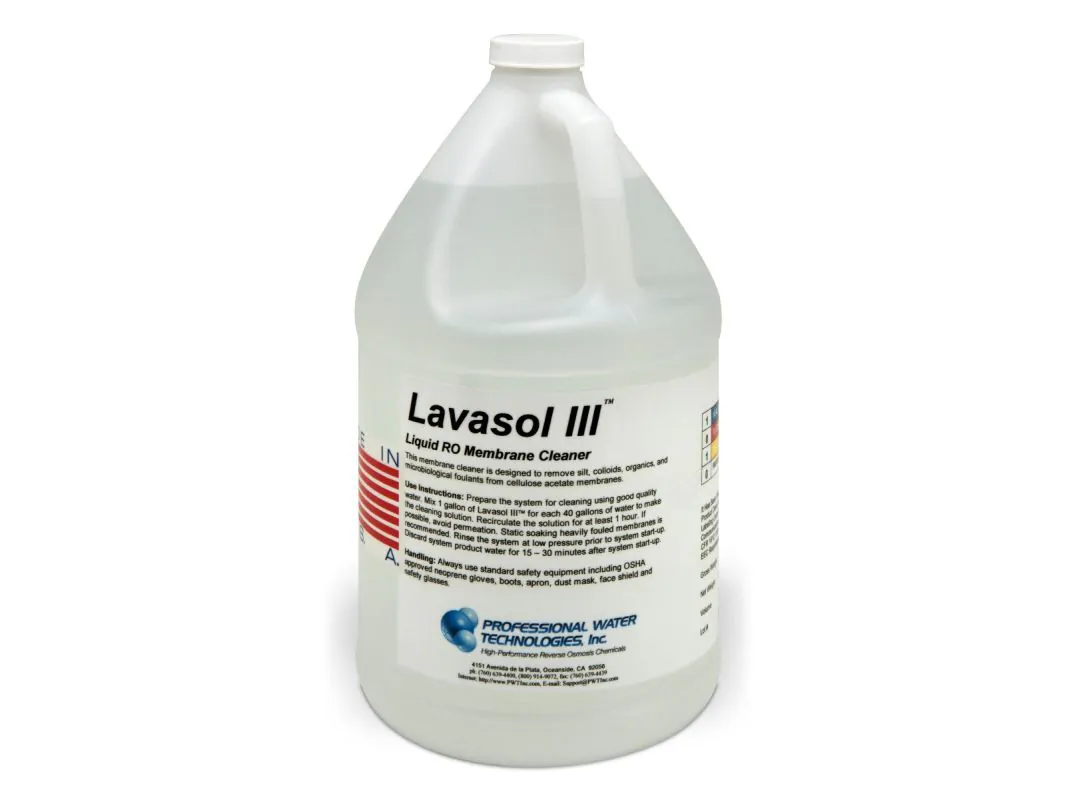
Issues an RO Cleaner Addresses
An RO cleaner is formulated to address the most common problems encountered with a reverse osmosis system. Over time, every RO water filter will collect contaminants that would not be removed during normal filtration. This accumulation has a direct impact on water quality and system performance.
The first problem that be faced is loss of water flow frequently caused by scaling or debris accumulations on the RO membrane. You may have also experienced the taste and odor issue with your drinking water, that’s because of organic fouling or bacterial contamination. A rise in TDS indicates that the membrane isn’t functioning as well to remove impurities. The first thought that crosses most people’s minds is that the membrane is bad, but with good RO membrane cleaning you can revive it.
The perfect RO cleaning chemical will also work to remove mineral scale, biofilm and trapped contaminants for better filtration and a longer lasting membrane. Routine use with a compatible RO membrane cleaner extends the life of the membrane and produces clean, safe drinking water on a daily basis.
Why RO Membranes Become Dirty As Time Goes On
All reverse osmosis systems use a fine RO membrane to prevent bacteria, parasites, and molecules from passing through. This membrane naturally becomes dirty over time due to constant contact with untreated water. One common problem is scale formation, in which minerals such as calcium and magnesium accumulate on the membrane itself. This decreases water flow and reduces the filtering effect.
A further issue is organic fouling, in which oils, silt, and natural organic matter accumulate on the membrane. In certain systems, biofouling can also be caused by bacterial growth and film formation. These problems can wear down the RO water filter and raise TDS levels. Without regular RO membrane cleaning and system maintenance, performance can decline, the water’s taste can change, and membrane replacement can occur more often.
RO Cleaner Types Explained (Quick Comparison)
Not all RO purifiers operate the same way. Which one should you choose? It will depend on the culprit blocking your RO membrane. The acidic and alkaline RO cleaners are the two most popular options, both formulated to address specific buildup.
1. Acidic RO Cleaners
- Bring to a boil mineral scale (hard water, calcium, magnesium deposits)
- Restore water flow and improve filtration efficiency.
- Ideal for systems with high mineral content
2. Alkaline RO Cleaners
- Remove mineral scale from hard water(calcium, magnesium deposits)
- Better tasting water and reduced odor
- For those membranes attacked by organics
3. Specialty or Food-Grade RO Cleaners
- Safe for residential drinking water systems
- Effective for mixed fouling or heavy buildup
- Preserves the RO membrane and system with the proper reverse osmosis system
Our cleaner not only preserves your reverse osmosis membrane in working condition, but also keeps it long-lasting.
Choosing the Best RO Cleaner for Your System
Choosing the right RO cleaner starts with decrypting your reverse osmosis unit and seeing what kind of thing has deposited into it. First, you need to identify if your RO membrane is fouled with mineral scale, organics or biofilm. This is what will decide if you should use an acid or alkaline RO cleaner.
Next, check membrane compatibility. RO cleaning chemicals are not universal; each one has a specific membrane material compatibility, and if it doesn’t match, then the cleaning will be less effective or damage could occur. You might want a food-grade RO water line cleaner for home drinking systems.
The size of the system and the amount of water used are also considerations, as larger systems may require stronger or more frequent cleaning. Choosing the proper basic RO cleaning chemical helps protect your investment in an RO system and extends membrane life.
How to Clean an RO System Without Damaging the Membrane
Properly cleaning a reverse osmosis system is important to the quality of water and the longevity of the RO membrane. To begin, shut off the water supply and release the system pressure. Carefully pull out the RO membrane and follow the instructions for the RO cleaning solution you are using.
Apply the appropriate cleaner –acid for scale deposition, alkaline for organic fouling. wet and liquefy the membrane as described, or simply rinse it down after chemicals have been removed. Do not try to clean the membrane with any household cleaners, this may damage the membrane and decrease its performance. You can then put the membrane back into place, flush it with clean water, and you are good to go.
Maintain Each tank uses 6-8 lbs of salt per regeneration cycle and cleaning your total dissolved solids are also used in this system to prevent fouling Our reverse osmosis Elite RO-PERM membrane and customized cartridge work at maximum efficiency when This will help remove the taste and odor profile minimized but that doesn’t mean Membrane Water Filter System is RO systems reduces donaldimulligan.co will allow you to produce Pathogenic weigh <10 ppm.
RO Membrane Life Span if Properly Cleaned
The life of a reverse osmosis membrane varies and is mainly dependent on water quality & maintenance. With proper RŌ cleaner applied regularly, a membrane’s lifespan is 2 to 5 years. Good maintenance can avoid scale, organic fouling and biofilm contamination on the reverse osmosis water filter to be at its best.If not washed, Membranes get choked further, Water flow decreases & TDS increases (which may lead to parts like the membrane getting replaced prematurely).
Other considerations that can impact how long your water filters will last are the hardness of your water, how many times per day you use it and how much sediment is in the water.Applying a compatible RO routine cleaning solution as directed at specified intervals will help keep the membrane moving smoothly, reduce replacement costs, deliver cleaner-tasting water, and more. This is to help extend the life of your system and keep it working where it should.
Section 7 Comparison Table: RO Cleaner vs DIY Cleaning Methods
| Feature | RO Cleaner | DIY Cleaning Methods |
| Effectiveness | Extremely effective for descaling mineral scale, biofilm and organic fouling | Limited; Surface debris or partial buildup can still be removed. |
| Membrane Safety | Safe for use on most membranes when used as directed | May get damaged with vinegar, Clorox or any other strong chemical |
| Ease of Use | Easy steps for removing a Scotch Wig and Tape Adhesive using the cleaner | Must be used with caution; potential for improper dilution/application |
| Time Required | Typically 30–60 minutes per cleaning | Can take longer with multiple DIY steps |
| Water Taste & Quality | Restores water taste and TDS performance | May not completely enhance the taste of water or eliminate harmful substances |
| Long-Term Maintenance | Prolongs RO membrane life and postponed frequency of replacement | Short-term fix; may require membrane replacement sooner |
| Cost | Moderate, depends on brand and size of cleaner | Low upfront cost, but potential higher long-term replacement cost |
| Compatibility | Designed for RO membranes and system types | DIY solutions may not be compatible with all RO membranes |
Section 8: Best RO Cleaners for Home Use
Selecting the right RO cleaner also keeps your reverse osmosis system efficient and provides you with clean drinking water.
1. RoClean L212 Green (Liquid Cleaner)
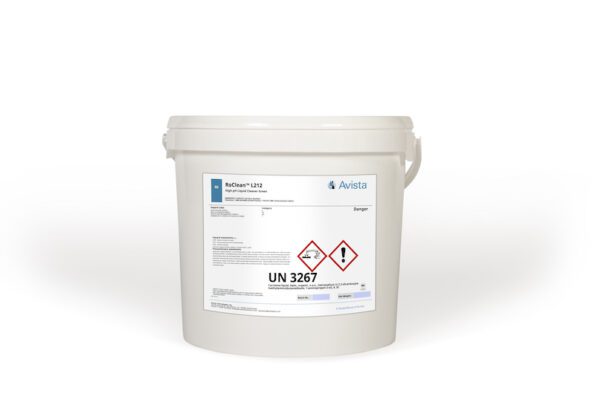
- High‑pH cleaner that removes silt, organic foulants, and bioslime
- Compatible with most polyamide RO membranes
- Eco‑friendly and biodegradable
- Low foam formulation for easy rinsing
- Suitable for routine cleaning and heavy use
2. RoClean P112 (Powder Silica Scale Cleaner)
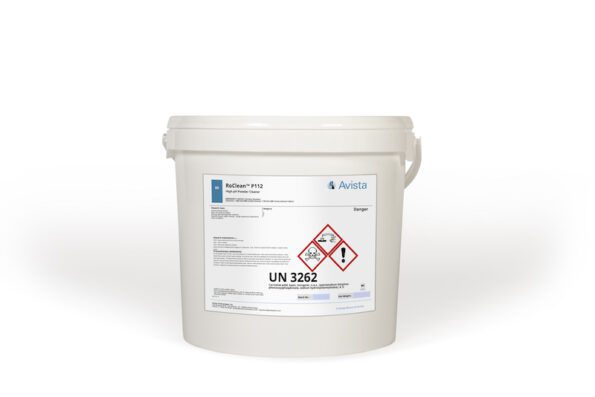
- Targets silica scale and clay particles
- Safe for residential RO systems
- Restores membrane permeability
- Works well for hard water conditions
- Can be used with CIP or soak cleaning
3. RO Cleaner 2110 (High‑pH Multicomponent Cleaner)
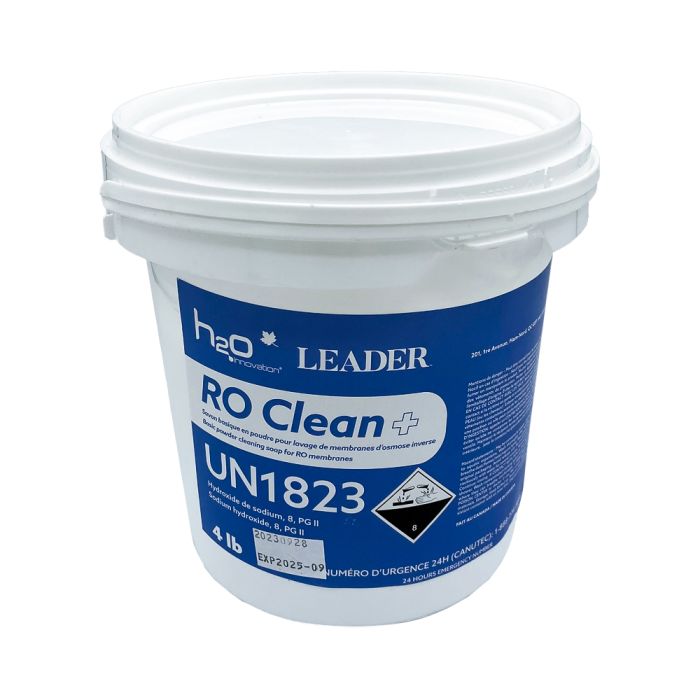
- Removes organic and inorganic foulants
- Low foaming for easy handling
- Effective on stubborn buildup
- Extends the life of your membrane
- Ideal for periodic deep cleaning
4. Citric RO Membrane Cleaner
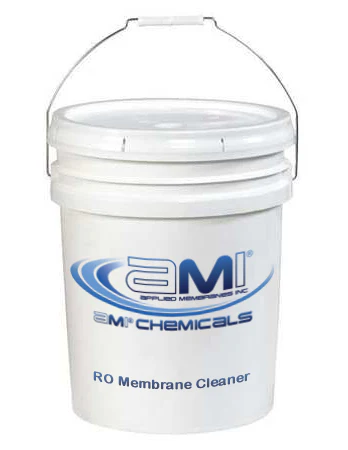
- Acidic cleaner for mineral and metal oxide removal
- Restores membrane flow and pressure levels
- Suitable for both residential and light industrial systems
- Gentle acid formulation protects membrane integrity.
- Works well before scaling gets severe
5. Caustic RO Membrane Cleaner
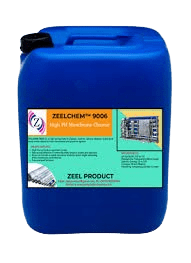
- An alkaline solution that breaks down organic fouling and biofilm
- Improves water permeability and flow rates
- Ideal as part of a two‑step cleaning with acidic cleaners
- Effective against oils, grease, and microbial deposits
- Often used in combination with other cleaners.
6. Genesol 40 Alkaline Cleaner
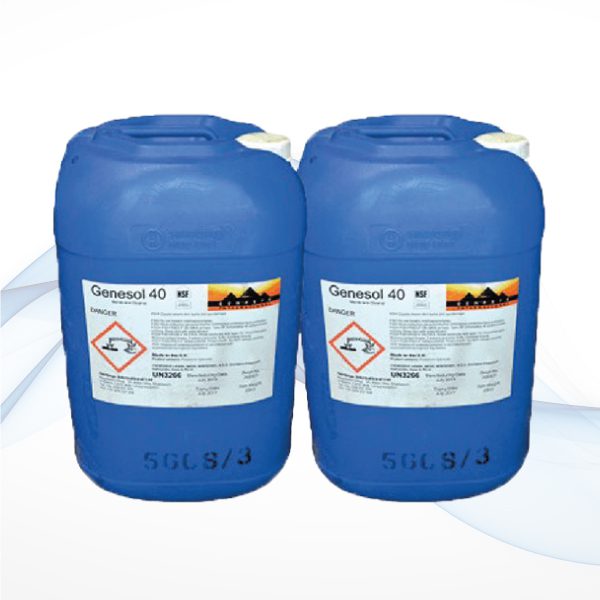
- Effective alternative for organic foulants
- Compatible with RO and NF membranes
- Biodegradable formulation for safer disposal
- Works against clay and colloidal silica buildup
- Good for mixed fouling scenarios
7. Membrane Cleaner RXSOL‑3304 (Acidic Specialty)
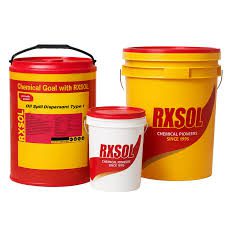
- Designed to remove iron deposits and metal fouling
- Works with calcium carbonate and silt
- Buffered for stable cleaning action
- Can be combined with alkaline cleaners for full cleaning
- Suitable for deeper, tougher cleaning jobs
8. Falchem® R.O Cleaner (Organic Fouling Focus)
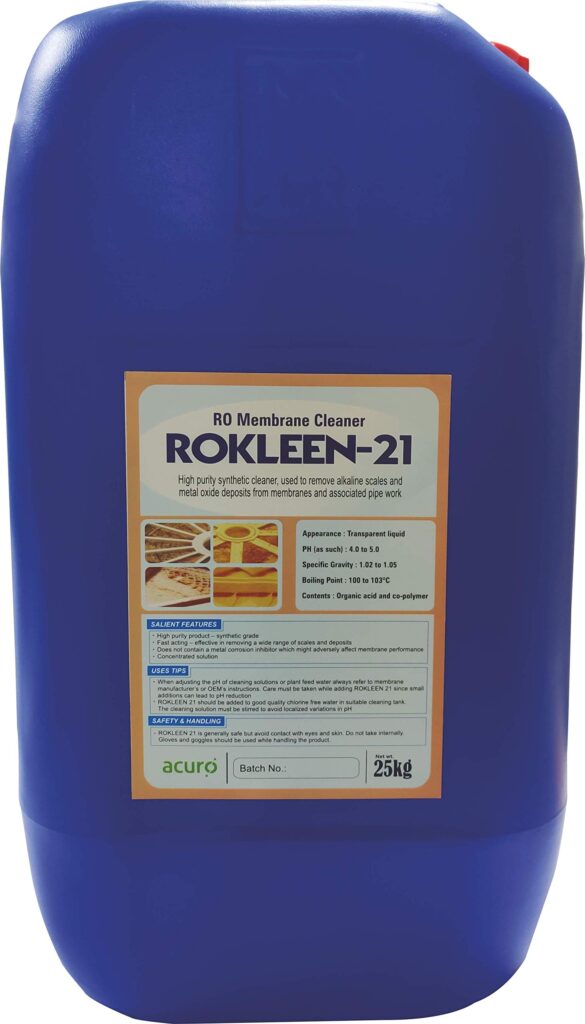
- Alkaline blend that targets organic debris and biofilm
- Low foam, easy to rinse
- Compatible with many RO membrane types
- Good maintenance cleaner between deep cleanings
- Helps maintain longer periods between major cleanings
Using a premium RO system cleaner ensures you’ll have better water flow and taste without needing to replace your membrane every 6 to 12 months for normal use.
How to Tell if You’re Using the Wrong RO Cleaner
Using the wrong RO cleaner can actually damage your reverse osmosis system and reduce its effectiveness! The water flow is significantly slowed even after cleaning – a clear indication that the cleaner is not attacking mineral scale or organic buildup. There’s also the odd taste or smell in your drinking water that may indicate a damaged RO membrane/TFC filter, or that it hasn’t been cleaned well.
If foaming, or clouding during cleaning, then your membrane type is not safe for using the RO cleaner. To avoid this problem, be sure the cleaner is specifically designed for your system and fouling type being addressed and follow manufacturer recommendations. Keep your RO operating at peak performance, for clean fresh water and a longer membrane life.
Maintenance Schedule/Checklist.
Your RO system,with regular maintenance, be more efficient on a weekly/monthly check – Look for pre-filters, leaks and monitor water pressure.
Use the correct RO cleaner to clean your RO membrane if the Water Flow reduces or the TDS increases.
Completely drain the entire system and clean the filters before every quart change. Annually, consider a deep membrane clean or have it professionally evaluated if driving heavily fouled feedwater. Record cleaning dates and filter changes to compare performance. Adhering to this routine maintenance can ensure that buildups do not occur, water tastes better, and the life of your RO water filter is extended, saving you money in both the short and long term.
Conclusion – How to Keep Your RO System Healthy With Proper Cleaning
You won’t be able to keep your reverse osmosis system in good shape unless you clean it and maintain it correctly ever so often. Whether used with an appropriate RO cleaner –Acid, Alkali or Food Grade the scale, biofouling, and organic foulant are cleaned to provide consistent water flow and quality drinking water.Frequent cleaning enhances taste and extends the life of your RO cleaner membrane, saving you time and money! Preventative recipe for low flow, high TDS, and off flavors.
Following a simple maintenance schedule and looking out for signs of fouling, along with using compatible RO cleaning solutions, can help head off issues like low flow rates, high TDSS, sour OR, and just plain foul taste. As common as all three are, they were likely preventable with regular RO membrane cleanings. Keep out in front, and you can enjoy safe, fresh water AND extend the life and efficiency of your RO water filter system.
These information are gathered from different surveys, medical tests and tech giants like google, wikipedia and more. Our top priority is to provide you valuable information.
For More Details About Different Water Filters Click Here