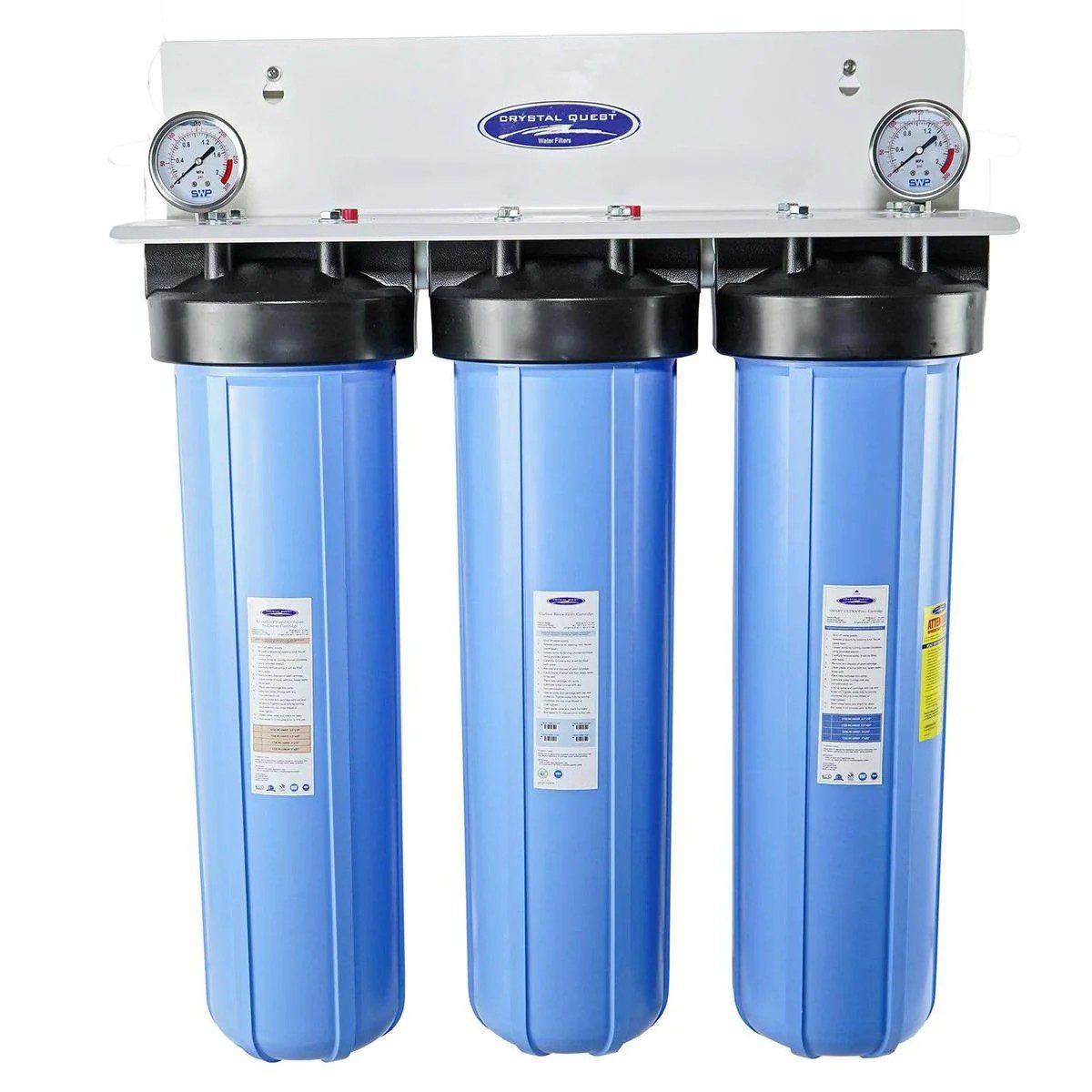
You can’t taste it. You can’t smell it. You can’t see it in a glass of water held up to the light. Arsenic can be one of the more disconcerting components to find in a water report; it gives no warning at all.
If your well test revealed arsenic levels or you received a Consumer Confidence Report with numbers you don’t fully comprehend from your utility company, chances are you have some questions: what’s going on here, and how can it be fixed? Unfortunately, not every arsenic filter marketed as purifying arsenic, arsenic filter actually removes arsenic and those that do may vary significantly in cost, maintenance requirements and how well arsenic filter fit with the water in which you reside.
This guide explores what arsenic filters really do, on which technologies arsenic filters work, and how to select an arsenic filter without becoming overwhelmed with arsenic filter certification language.
What Arsenic Filters Actually Do
An arsenic filter is a treatment device installed beneath or at the entryway to your home arsenic filter removes arsenic from water before it enters for consumption or bathing, pulling any that has dissolved to protect drinking, cooking or bathing with it. Unfortunately this job often gets underestimated!
Here’s the part that trips a lot of homeowners up: your everyday pitcher filter, the one sitting in your fridge, almost certainly isn’t doing this. Standard carbon filters are built to improve taste and reduce chlorine, not to bind or reject dissolved metals. If the arsenic filter doesn’t specifically claim arsenic removal, assume it will do nothing about it.
Reverse osmosis, adsorptive media (activated alumina or iron-based), ion exchange, and distillation are the technologies that actually work to remove arsenic. Each arsenic filter relies on different mechanisms for doing this task – something most buying guides don’t emphasize enough.
Who Should Actually Prioritize This
Not every household needs to address arsenic with urgency; however, certain situations necessitate it:
- Private well owners in states known to contain geologic arsenic such as New England (in particular Maine and New Hampshire), parts of Arizona and Nevada, the Great Lakes region, and California’s Central Valley should take caution with their wells.
- Prenatal and early-childhood exposure have been associated with elevated long-term health risks, making this decision one with higher stakes than usual.
- Anyone with a water report showing detectable arsenic, even below the legal limit, given that there’s no confirmed “safe” threshold.
- Families who eat a lot of rice or rice-based foods, since arsenic accumulates in rice and filtering your cooking water reduces total dietary intake.
If you’re on municipal water with a clean, recent report, this is less urgent — but still worth a second look every year or two, since source water and treatment can change.
The Technologies, Explained Simply
Reverse Osmosis (RO)
ROs utilize semi-permeable membranes with pores small enough to filter arsenic while still permitting water molecules to pass through. They’re incredibly versatile as they also handle lead, nitrates, fluoride and most other dissolved contaminants all at the same time. Under-sink RO units are common, DIY-friendly to install, and typically reduce arsenic by 90–95% when the arsenic is in its oxidized form (more on that below).
Adsorptive Media: Activated Alumina and Iron-Based Media
These systems work differently — water passes through a bed of granular media, and arsenic ions physically bond to the material’s surface. Activated alumina is the most established version; iron-based media, sometimes called granular ferric oxide (GFO), is a newer alternative gaining traction. Both are highly effective, often exceeding 95% removal, and they’re the go-to choice for whole-house (point-of-entry) systems since they don’t waste water the way RO does.
Ion Exchange
Ion exchange resin converts arsenic ions to chloride or hydroxide ions for easier binding sites in water chemistry, offering protection from arsenic toxicity while at the same time improving performance. On paper it works well but there’s one potential drawback almost no one mentions upfront: high levels of sulfate will compete for binding sites quickly, leading to decreased performance; hence this situation necessitates thorough inspection of water chemistry rather than solely the arsenic count.
Distillation
Boiling water and condensing the steam leaves arsenic behind, since it doesn’t vaporize at boiling temperature. It’s extremely effective but slow and impractical beyond small batches — a reasonable backup option, not a whole-house solution.
Reading Certification Labels Without Getting Fooled
This is where most arsenic filter buying decisions go wrong. “NSF Certified” on a box doesn’t automatically mean arsenic filter is covered.
- NSF/ANSI 42 covers material safety and chlorine/taste reduction — a baseline standard that says nothing about arsenic.
- NSF/ANSI 53 covers health-related contaminants like lead and cysts, and can include arsenic — but only if it’s explicitly listed as a certified claim.
- NSF/ANSI 58 is the standard specifically relevant to reverse osmosis systems, and validates arsenic filter reduction claims made about them.
- WQA and IAPMO systems may also be found on non-RO systems; their arsenic reduction claims carry equal weight when stated explicitly.
Choosing Between Point-of-Use and Whole-House
- Point-of-use (POU) systems — undersink RO, countertop units and distillers – treat water at just one tap. They’re the right call if you rent, want a lower upfront cost, or only care about drinking and cooking water.
- Point-of-Entry (POE) systems – such as adsorptive media filters or whole house RO filtration – treat all water entering a home, including bathing and laundry water. While more expensive, and typically needing to be installed by licensed professionals, POE systems are usually recommended as an effective means of full home coverage in regions with high arsenic concentration.
| Option | Best for | Typical cost | Install |
| Under-sink RO | Renters, drinking/cooking focus | $150–$400 | DIY-friendly |
| Whole-house adsorptive media | Well owners, full-home protection | Several hundred to $1,500+ | Plumber recommended |
| Whole-house RO | High-arsenic wells, full coverage | $1,000–$3,000+ | Professional install |
| Distiller | Small households, backup use | $100–$300 | DIY |
Installation labor for arsenic filter systems typically runs $200–$800 depending on region and plumbing complexity — get at least two local quotes before committing.
5 Best Arsenic Filters
1. Waterdrop G3 P800
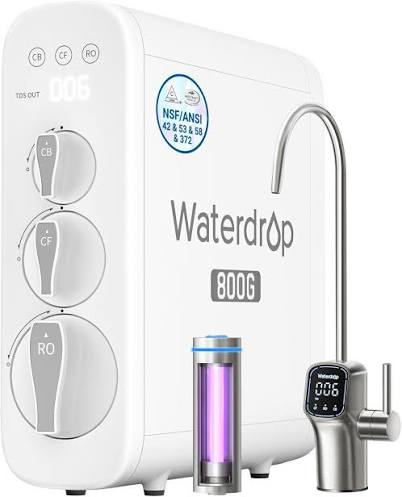
Waterdrop G3 P800 is the best all-around pick if you want one system that handles arsenic and just about everything else in your water. It’s a tankless under-sink reverse osmosis unit, IAPMO certified to NSF/ANSI 42, 53, and 58, and independent testing showed it removing 100% of arsenic along with lead, fluoride, and other dissolved metals.
It produces 800 gallons per day with a 3:1 efficiency ratio, which wastes noticeably less water than older tank-based RO designs, and its compact tankless build frees up under-sink space. The catch is price — it’s the most expensive option here — and you’ll need basic plumbing access to install it.
2. AquaTru Classic
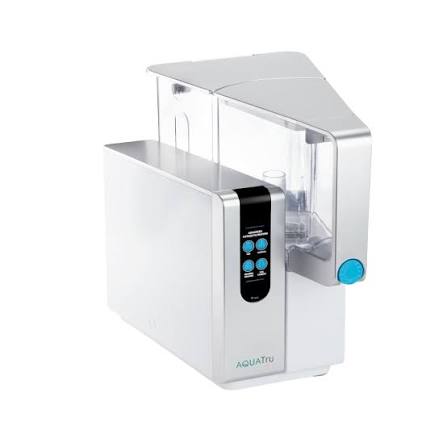
AquaTru Classic is the right call if you rent, don’t want to touch your plumbing, or just want something you can set up in ten minutes. It’s a countertop reverse osmosis system — you fill a tank, and filtered water collects in a carafe, no installation required. It carries five NSF/ANSI certifications (41, 53, 58, 401, and P473) and independently tests at 96% arsenic removal, alongside strong PFAS, lead, and fluoride reduction.
The trade-offs are a small 3-quart tank that means manual refills, and it’s priced at the higher end for a no-plumbing unit, but for renters or small households it’s the most certified option on the counter.
3. APEC ROES-50
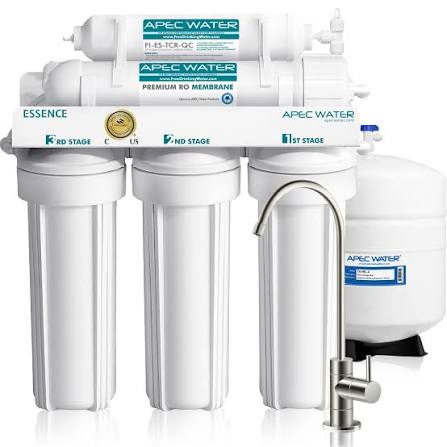
APEC ROES-50 is the value pick if you want a permanent under-sink RO system without the tankless price tag. It holds the WQA Gold Seal to NSF/ANSI 58 and removes arsenic, lead, and fluoride through a 5-stage filtration process, and it runs entirely on water pressure — no electricity needed, so it still works during a power outage.
It’s also been on the market for decades, which means there’s a huge base of installed units and troubleshooting support if something goes wrong. The downsides are a bulkier tank that takes up more cabinet space and a less efficient 4:1 wastewater ratio compared to tankless competitors.
4. SpringWell Whole House Filtration
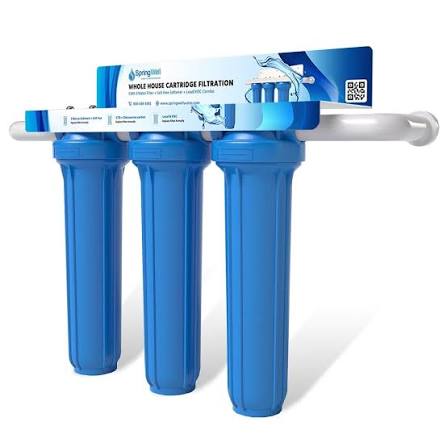
SpringWell Whole House Filtration is the one to choose if you’re on a private well and want arsenic addressed at every tap in the house — showers, laundry, and kitchen alike — not just your drinking water. It uses adsorptive iron-based media rather than a membrane, so there’s no wastewater stream the way there is with RO. Because it’s treating your whole home, it’s worth getting a certified lab test first to size the system correctly, and you should plan on a professional install.
One caveat worth flagging: some of SpringWell’s broader contaminant claims (like PFAS) aren’t independently certified, so specifically confirm the arsenic reduction documentation before buying rather than assuming it’s covered under a general “removes heavy metals” claim.
5. Clearly Filtered Water Pitcher
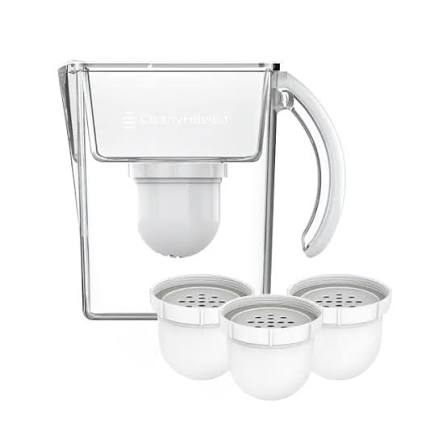
The Clearly Filtered Water Pitcher is one of few no-install options on this list, making it suitable for renters or as an emergency backup system. At first glance, this device promises 99.99% arsenic reduction but this figure relies on third-party laboratory testing (ISO 17025 accredited) rather than formal NSF/ANSI 53 certification; its 42 and 372 certifications don’t specifically address arsenic reduction – so an RO system should always be preferred when testing shows high arsenic levels; otherwise this method might only provide temporary relief.
Common Mistakes Worth Avoiding
- Assuming a standard pitcher filter covers arsenic — check the certified claims, not the marketing copy.
- Skipping full water chemistry testing and choosing ion exchange in a high-sulfate area, where it underperforms.
- Treating “under 10 ppb” as synonymous with “safe,” when the EPA’s own health-based goal is zero.
- Never retesting after installation, which means silent filter failure can go unnoticed for months or years.
- Avoiding arsenic contamination on anaerobic well water and wondering why its certified system hasn’t achieved its expected performance target is unacceptable.
FAQs About Arsenic Filters
Q: Can Brita or PUR pitcher filters remove arsenic?
Unfortunately not. Standard carbon pitcher filters are designed to filter out chlorine taste and some organic compounds, not dissolvable metals such as arsenic. Therefore, for effective arsenic reduction, an explicit and certified arsenic filter reduction claim must be included within your system’s warranty terms.
Q: Can boiling water remove arsenic?
No – boiling actually increases arsenic concentration rather than dissolving it into steam, leaving its presence behind in its original container. Distillation is currently the only heat-based method that has proven successful, collecting condensed vapor while leaving arsenic behind in its original container.
Q: Do water softeners remove arsenic?
No. Softeners are built to address calcium and magnesium hardness through ion exchange tuned specifically for those minerals. They’re not certified or effective for arsenic.
Final Thoughts: Arsenic Filter
Arsenic isn’t something you can eyeball your way through — testing first, then matching the right technology to your actual water chemistry, is the only approach that consistently works. If you’re on a well, especially in a known high-risk region, treat this as a testing priority this year rather than a someday project. And whatever system you land on, don’t just install it and forget it: a arsenic filter’s real value comes from staying maintained and getting retested, not from the day it goes in.
These information are gathered from different surveys, medical tests and tech giants like google, wikipedia and more. Our top priority is to provide you valuable information.
For More Details About Different Water Filters Click Here