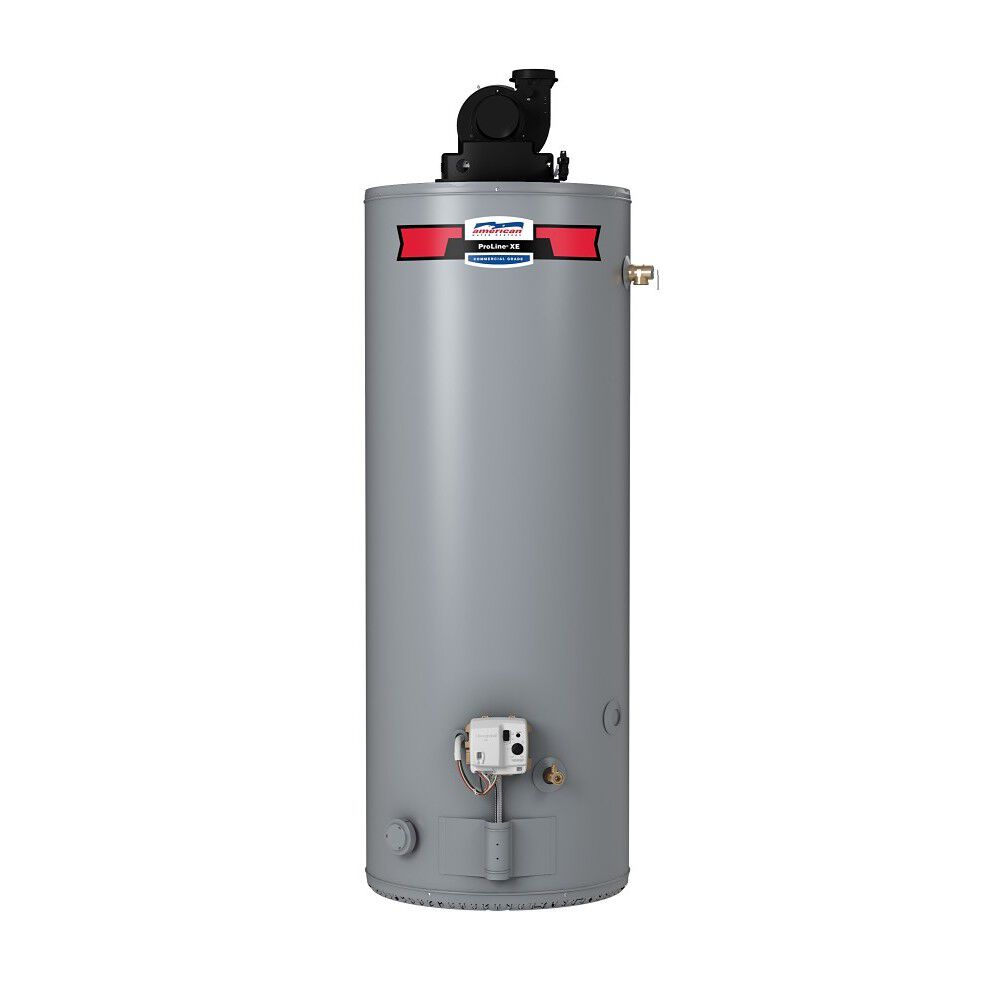
If you have found yourself researching 75 gallon water heaters, chances are it goes beyond simple curiosity. Something prompted this — maybe your current tank just failed, maybe you’re renovating and adding a bathroom, maybe your family has simply outgrown your 40 or 50-gallon unit. Whatever brought you here, the goal of this guide is simple: help you figure out whether 75 gallon water heater is the right call, what 75 gallon water heater should cost, and what a proper 75 gallon water heater installation actually involves.
A lot of water heater content online either oversimplifies this decision into a generic sizing chart, or buries you in spec-sheet jargon. This guide tries to do neither. We’ll walk through real decision points — the kind you’d actually ask a plumber if you had one standing in your kitchen.
What Is a 75 Gallon Water Heater, Precisely?
A 75 gallon water heater is an airtight storage-tank unit which holds and continuously reheats approximately 73-76 gallons of water for on-demand use, sitting within the upper-middle range of residential tank sizes – larger than 50-gallon tanks but smaller than 80-100 gallon ones used by very large households or light commercial settings like gyms and salons.
Who Actually Needs 75 Gallon Water Heater?
Sizing charts often fall short on this front; they only consider total daily usage rather than how demand clusters throughout the day.
A 75 gallon water heater tank often makes sense as an optimal option in practice:
- Households of 5–7+ people
- Homes with 3 or more bathrooms used at overlapping times (think: two teenagers showering while a dishwasher runs)
- Homes with a soaking or jetted tub, which alone can draw 40–80 gallons per fill
- Multi-generational households
- Light commercial use — small gyms, salons, group homes, boutique inns
If you’re a household of 1–4 people without a soaking tub,75 gallon water heater is very likely more than you need. Oversizing isn’t just a wasted upfront cost — it also means paying to keep more water hot around the clock than you’ll ever use, which adds up in standby energy losses over the tank’s lifetime.
Gas vs. Electric vs. Hybrid: Which Fits Your Home?
There’s no universally “best” fuel type — it depends on what infrastructure your home already has and how you weigh upfront cost against long-term running cost.
Natural gas units heat water fast and recover quickly, which matters if your household draws hot water in bursts. They do require a gas line and proper venting, so if your home doesn’t already have gas plumbed in, that adds to installation cost.
Electric resistance units are simpler to install — no venting required — but recover more slowly and generally cost more to run per gallon heated, depending on local electricity rates. They’re the default choice for homes without gas access.
Hybrid heat pump water heaters pull heat from surrounding air rather than generating it directly, which makes them the most efficient option to operate over time. The tradeoffs: higher upfront cost, slower recovery under heavy simultaneous use, and a need for surrounding air volume (commonly 700+ cubic feet) — which is why they work best in garages or larger utility rooms rather than small closets.
| Fuel Type | Recovery Speed | Typical Unit Cost | Best Fit |
| Natural Gas | Fast | $1,200–$2,600 | Homes with existing gas line, high simultaneous demand |
| Propane | Fast | $1,300–$2,700 | Rural or off-grid homes |
| Electric Resistance | Slower | $1,000–$2,200 | No gas access, simpler installs |
| Hybrid Heat Pump | Slowest, most efficient | $2,000–$3,800 | Efficiency-focused buyers with garage/utility room space |
Installing a 75 Gallon Water Heater: What’s Actually Involved
Because these tanks are larger and heavier than standard units — often 600+ lbs when full — installation isn’t quite as simple as a straight swap. Here’s the basic process:
- Switch off water supply, fuel/power and drain/remove old tank.
- Before purchasing, ensure the space, floor support, doorway/stairwell clearances can accommodate the height and diameter of your new tank.
- Set and level the new unit, then connect the cold-in and hot-out water lines.
- Connect the fuel source — gas line and venting for gas units, or a dedicated circuit (commonly 30-amp/240V) for electric and hybrid models.
- Install a thermal expansion tank if your home has a closed plumbing system, which many local codes require.
- Install or verify the TPR (temperature and pressure relief) valve, with its discharge line routed to a safe location — never capped.
- Before powering on, fill the tank completely with water. This step is crucial: turning on an electric unit before it has reached capacity can damage its heating element almost instantly and cause it to short out.
- Test for leaks, set your thermostat (120°F is usually sufficient), and ensure proper venting draft on gas units.
- Schedule any necessary permit inspections as part of replacement projects in your jurisdiction.
5 best 75 Gallon Water Heater Models
1. A.O. Smith GPVX-75L — Best Power-Vent Gas
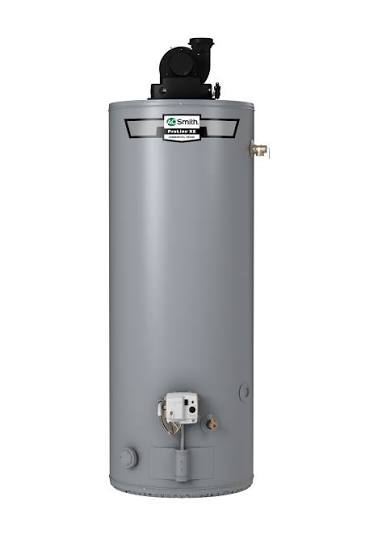
This 75 gallon water heater nominal tank features a 76,000 BTU propane (or natural gas) burner capable of recovering an hourly recovery rate of 80.4 gallons, along with a 3-position rotatable blower outlet to facilitate flexible venting. Good pick if you need fast recovery and don’t have room for a standard atmospheric flue.
2. Reliance 6 75 XRRS — Best Budget Gas
The most affordable 75 gallon water heater unit in its category, still backed by a 6-year warranty, with a 75,100 BTU/hr natural gas burner and a compact, short design that fits into tight utility spaces. Green Choice “Eco-Friendly” design also reduces NOx emissions by up to 33% and includes FVIR technology to help avoid accidental ignition of flammable vapors near the unit, making this an excellent value pick if you simply require reliable capacity without additional features.
3. Rheem G75-75N — Best Standard Natural Gas
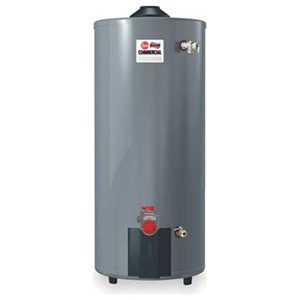
Rheem’s 75 gallon water heater natural gas line is frequently ranked among top picks for households needing dependable, fast-recovering hot water without the premium price of power-vent or condensing models — a straightforward, no-frills workhorse for large families.
4. Bradford White 75-Gallon Power Vent (TTW Series) — Best Built Quality
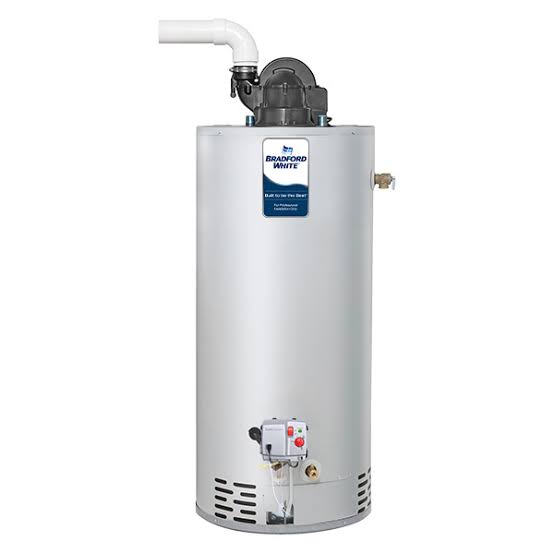
Bradford White is well regarded in the trade (many plumbers install it preferentially over box-store brands) for tank durability and consistent QC. The power-vent TTW series in the 75 gallon water heater range is a common professional recommendation when budget allows for a step up from Rheem or A.O. Smith’s base lines.
5. Rheem ProTerra 80-Gallon Hybrid Heat Pump — Best for Efficiency
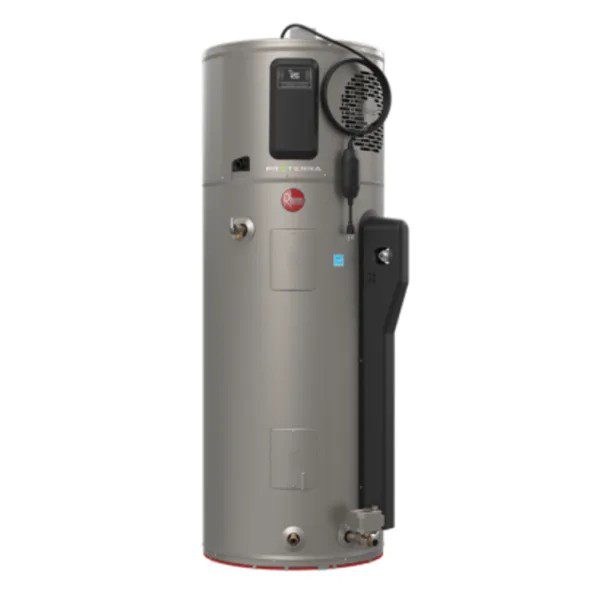
If you’re open to the closest hybrid equivalent (80 gallons, since true 75-gallon hybrids are rare), this is the strongest efficiency play. It carries a UEF around 4.0 on the 80-gallon model — roughly four times more efficient than a standard electric tank, and real owners report meaningful monthly savings versus older electric units, with a quiet exhaust fan that runs briefly after heavy hot-water use. Not to be overlooked before buying: this type of water heater may not be ideal in colder regions due to the slower heating rates and reduced heating retention compared with traditional heaters, its best performance lies within warmer environments.
Common Mistakes Worth Avoiding
- Sizing by gallons alone. As covered above, FHR tells you more about real performance than tank capacity does.
- Skipping the expansion tank where code requires it — this often shows up later as a dripping pressure-relief valve.
- Powering an electric unit dry, which destroys the heating element.
- Ignoring the anode rod. It’s a sacrificial rod that slows tank corrosion — neglecting it is one of the most common reasons tanks fail early, especially in hard water areas.
- Underestimating clearance for hybrid units, which need real air volume around them to work efficiently.
Maintenance and How Long These Tanks Actually Last
With reasonable upkeep, a 75 gallon water heater typically lasts 10–15 years. That lifespan depends heavily on a few maintenance habits:
- Flush the tank annually to clear sediment buildup
- Check or replace the anode rod every 2–5 years (more frequently in hard water regions)
- Test the TPR valve once a year
- Inspect for corrosion or slow leaks periodically
Absenting these maintenance steps not only shortens a tank’s lifespan but can lead to sediment buildup that reduces recovery rates over time and may be mistaken as “too small”, leading people to believe their tank is indeed inadequate when in reality it was simply neglected.
Is There a Better Alternative?
Not always, but worth a moment’s consideration before you commit. A whole-home tankless gas water heater solves the same “never run out of hot water” problem differently — unlimited output, but at a higher upfront cost and different flow-rate limitations. Two smaller tanks in parallel can also make sense in large single-story homes with distant plumbing runs. If you are seeking efficiency first and have enough room, a hybrid heat pump unit should be considered when comparing prices against traditional 75 gallon water heater gas or electric tanks.
Conclusion
A 75 gallon water heater can be an ideal upgrade choice for larger households, multi-bathroom homes and anyone reaching their tank’s limits – however it shouldn’t just be purchased because it “sounds safer”. Before making your decision to purchase, check your actual peak-hour demand, compare First Hour Rating against Gallon Capacity alone, and obtain an itemized quote which includes labor permits disposal charges – this way purchasing one becomes a measured, budgeted decision rather than simply guesswork.
These information are gathered from different surveys, medical tests and tech giants like google, wikipedia and more. Our top priority is to provide you valuable information.
For More Details About Different Water Filters Click Here