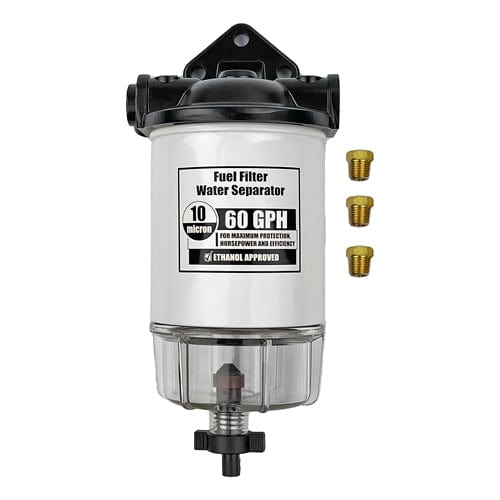
Have you ever had a diesel engine stall out for no obvious reason, or see a pool of water at the bottom of a clear filter bowl? Water in fuel is silent up until it goes loud, and after that when the rough idling becomes tearing your injectors out — more often than not; it’s already too late.
The fuel water separator filter, powered by gravity separation and coalescing filter media, is responsible for taking off the excess water and other contaminant from a diesel or gasoline before your engine has to encounter it. It may be the least expensive component on a diesel truck, boat or heavy equipment piece, yet one of its most critical.
This guide discusses what these filters do, who actually needs one, how to size and install one properly, and how to distinguish a common maintenance item from an indication that something more serious is wrong.
What a Fuel Water Separator Filter Actually Does
A fuel water separator filter is built into the fuel line [when they exist]—and should be almost always before the lift pump—and performs two functions. Number 1 — it acts like a regular fuel filter and filters dirt, rust and sediment. It draws the water out of the fuel stream using a coalescing filter, which makes small droplets combine with larger ones until they sink to the bottom in a bowl called a collection bowl.
The water that separates collects in this bowl, sometimes called a sump or sediment bowl until it’s drained. Most modern units include a water-in-fuel (WIF) sensor that’s basically an electronic probe that provides you a warning light as soon as the water reaches an acceptable level so you’re not plucking away at it to look in the bowl every time.
For diesel engines, this is especially important because of how modern fuel systems function. When it comes to common-rail injection systems, they are run at extremely high pressure and with very tight tolerances. Water is not compressible or a lubricant like diesel, so even a small amount makes its way through and will pit injector tips, corrode internals and in some cases hydraulic lock the resulting water right into pump scrap.
Why Water Gets Into Fuel in the First Place
Most people assume water in the tank means contaminated fuel from the pump, and sometimes that’s true. But the more common cause is condensation. As a fuel tank heats and cools — especially one that’s frequently run low — moist air inside the tank condenses on the walls and drips down into the fuel.
Boats are especially prone to this because of humidity and temperature swings near water. Ethanol-blended gasoline makes it worse, since ethanol actually attracts and holds moisture, which is part of why marine engines and small engines exposed to E10 fuel benefit from a separator even though they’re not diesel.
Who Actually Needs One
This isn’t a niche part. Fuel water separators are standard or strongly recommended on:
- Diesel pickup trucks (Power Stroke, Cummins, Duramax)
- Boats with diesel inboards or outboards
- Heavy equipment and construction machinery
- Tractors and agricultural equipment
- Generators and stationary diesel engines
- Commercial trucking fleets
- RVs and off-road diesel vehicles
Gasoline engines, particularly marine ones, can also benefit — not because gas engines are as sensitive to water as common-rail diesels, but because the moisture exposure tends to be higher in those environments.
Types of Fuel Water Separator Filters
Not all separators are created equal, and the differences matter more than you might think.
Spin-on cartridge filters screw onto a base, as an oil filter does. They are the least expensive to buy and also the type usually easiest to work on.
With this system, you permanently leave a housing & bowl in place, and simply change only the internal filter element. They are more expensive to fit initially, but often cheaper per service interval in the long run – especially for fleets or heavily used equipment.
Centrifugal separators or those using spinning motion to throw water outward, are typically used on high-flow industrial or marine applications.
Racor is renowned for dual-stage units, which incorporate a coarse primary filter and a finer final filter in one housing — ideal when fuel quality can fluctuate.
Heated separators also have a heating element in them to prevent gelation of fuel in cold weather which is important in northern climates where diesel will just wax up at low temp.
| Type | Best For |
| Spin-on cartridge | Easy DIY replacement |
| Replaceable element | Lower long-term cost, heavy-duty use |
| Turbine/centrifugal | High-flow industrial/marine |
| Dual-stage (Racor-style) | Diesel trucks, boats, generators |
| Heated | Cold-climate operation |
Signs Your Fuel Water Separator Filter Needs Attention
A failing or clogged separator tends to announce itself through performance, not just through a warning light:
- Hesitation or stalling, especially under load
- Loss of power going uphill or under acceleration
- Hard starting or a rough idle
- Visible water sitting in the sight bowl
- A WIF sensor warning light
- White or sputtering exhaust smoke
One distinction worth making clearly: if you’re draining water occasionally, that’s normal maintenance. If you’re draining water every few days, the filter isn’t the problem — something upstream is. A cracked tank vent, a failed fuel cap seal, or condensation buildup in a tank that’s frequently run near empty are the usual culprits, and no amount of filter changes will fix those.
Installing a Fuel Water Separator Filter
Choose a mounting location close to the tank, before the lift pump, somewhere you can actually reach to drain it.
- Shut off the fuel supply and relieve any pressure in the line.
- Mount the bracket level — this matters for accurate water-level reading in the sight bowl.
- Connect the inlet line from the tank and the outlet line to the lift pump, following the flow direction arrows on the housing.
- Install the filter element, lightly oiling the gasket and hand-tightening — never use a wrench to crank down a spin-on filter.
- Prime the system per the manufacturer’s instructions to clear air from the line.
- Run the engine at idle and check every connection for leaks before driving or operating normally.
One installation mistake worth flagging specifically: never install a separator on the pressure side of the lift pump unless the manufacturer designed it for that configuration. Pressure-side installation on a suction-designed unit can crack housings or damage the pump.
Best Fuel Water Separator Filter Models
1. Racor 500FG Fuel Water Separator Filter
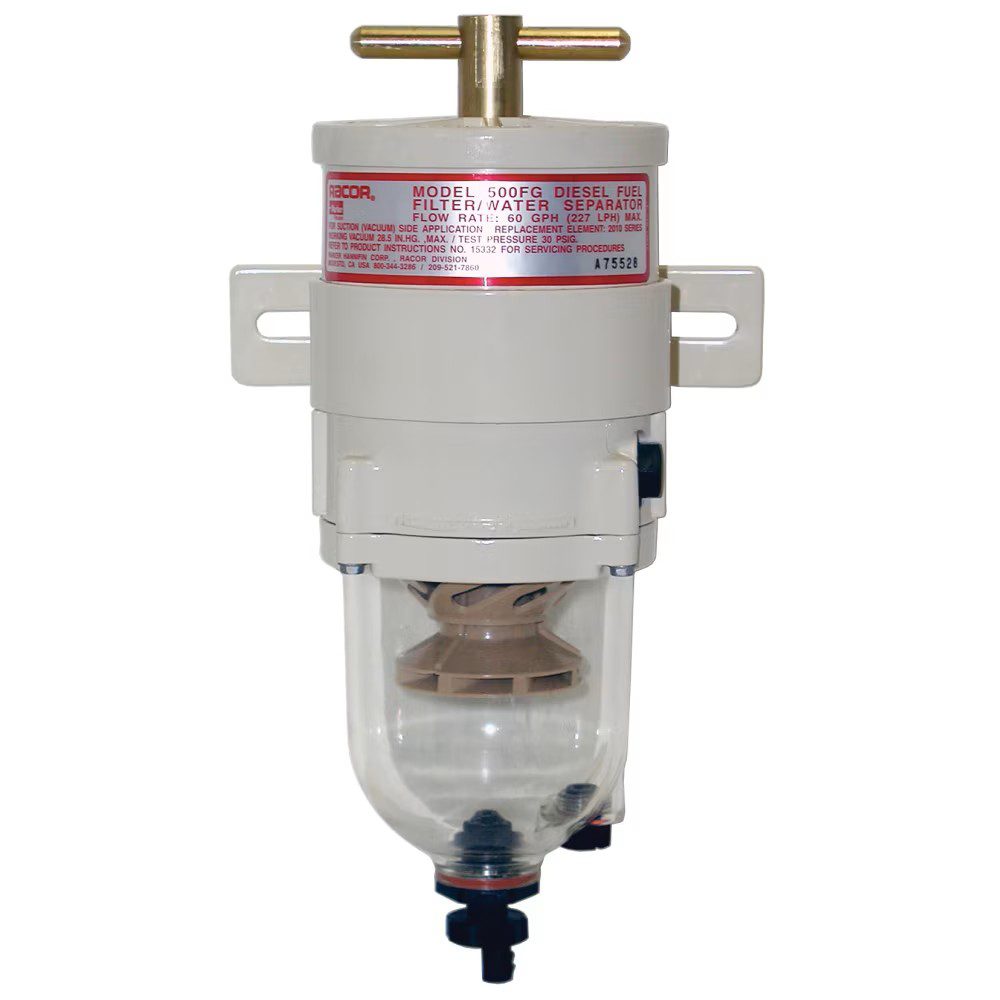
Racor 500FG Fuel Water Separator Filter is one of the best fuel water separator for diesel engine, marine and heavy-duty equipment on the market. This technology employs turbine filtration that separates water from fuel before it enters the engine, eliminating corrosion potential and saving injectors from damage.
The 500FG w/pleated option provides impressive versatility in various applications when it comes to filter elements, offering an array of choices ranging from 2, 10 and-30 micron. The short height also enables a visual inspection as it collects clear water from occupation, making checking the collection bowl quick and enabling simple drainage during maintenance tasks.
2. Quicksilver 802893Q01 Fuel Water Separator Filter
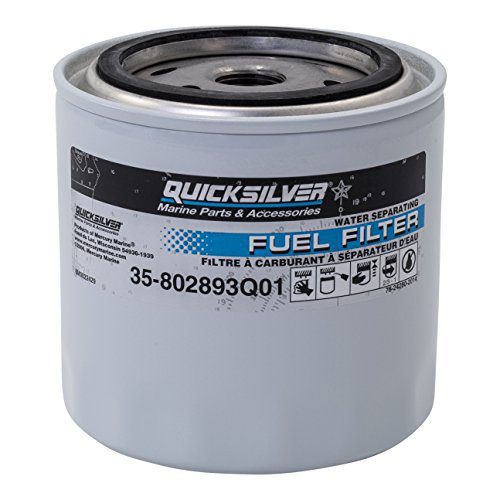
Quicksilver 802893Q01 Water Separating Fuel Filter — OEM Quality Replacement for Mercury and MerCruiser Marine Engines. With a filtration rating of 25 microns, it keeps water, dirt and debris from reaching sensitive fuel system parts as gasoline is pumped through.
Its corrosion-resistant metal housing and solid construction make it one of the most reliable fuel water separator filters for recreational boat owners against harsh marine environments.
3. Yamaha 10-Micron Fuel Water Separator Filter
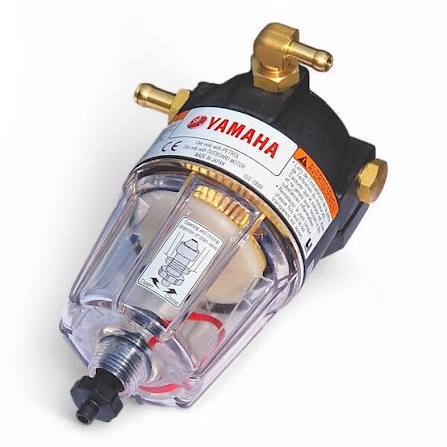
The Yamaha 10-Micron Fuel Water Separator Filter has been specifically engineered for use with Yamaha outboard engines, and provides tier-one protection against contamination due to water intrusion and fine particles. The 10-micron filtration media picks up smaller contaminants – along with water and fuel separation to optimize engine performance and reliability. Designed to OEM specifications, this filter combines long service life with proven reliability and easy installation features, making it a marine technician’s first choice.
Maintenance Schedule
Replaceable filter elements are generally recommended once every 200–500 engine hours, depending on brand and application — defer to your engine’s OEM manual when those numbers seem at odds.
In addition to planned service, inspect the sight bowl every week (or before each use, for boats) and drain water immediately when visible; if the unit is exposed to direct sunlight observe plastic bowls at six‐month intervals for signs of UV damage.
What It Costs
Pricing varies by brand and region, but as a general guide: replacement filter elements typically run $10–$60 depending on micron rating, complete spin-on assemblies run $40–$150, and dual-stage units with mounting brackets run $120–$350. Professional installation labor usually adds another $50–$150 depending on accessibility.
Units with electronic WIF sensors generally cost $30–$100 more than equivalent units without one — often worth it for fleet vehicles or boats where catching water early prevents a much more expensive failure down the line.
FAQs About Fuel Water Separator Filter
Q: How often should I change my fuel water separator filter?
The most recommended maintenance interval however is every 200–500 engine hours depending again on water exposure or dirty fuel sources which will keep the hot side clean in such circumstances. Refer to your specific OEM manual for the precise number.
Q: Power loss would not be caused by a fuel water separator Filter?
Yes. It is also when packed with crud, or once it has been fully soaked with water, that it partly impedes the flow to the engine and this usually shows as stalling under load or hesitancy.
Q: Do you know the difference between a fuel filter and a fuel water separator filter?
A standard fuel filter only removes particulates. A fuel water separator removes particulates and water, using coalescing media and gravity separation.
Q: Is a fuel water separator necessary on a gas engine?
It’s not always standard, but it’s commonly recommended for marine gasoline engines and any engine regularly running ethanol-blended fuel due to higher moisture absorption.
Final Thoughts
A fuel water separator filter is a small, inexpensive part standing between normal engine operation and a very expensive injector or pump repair. The decision tree is simple: pair the unit to your engine’s flow rate, specify the appropriate micron rating for your injection system, position to keep before the lift pump, and ensure regular draining and change intervals.
If your water is more often than not, don’t just keep changing filters — hunt the source down. Usually, this one diagnostic step is what stands between a quick adjustment and an ongoing, costly headache.
These information are gathered from different surveys, medical tests and tech giants like google, wikipedia and more. Our top priority is to provide you valuable information.
For More Details About Different Water Filters Click Here