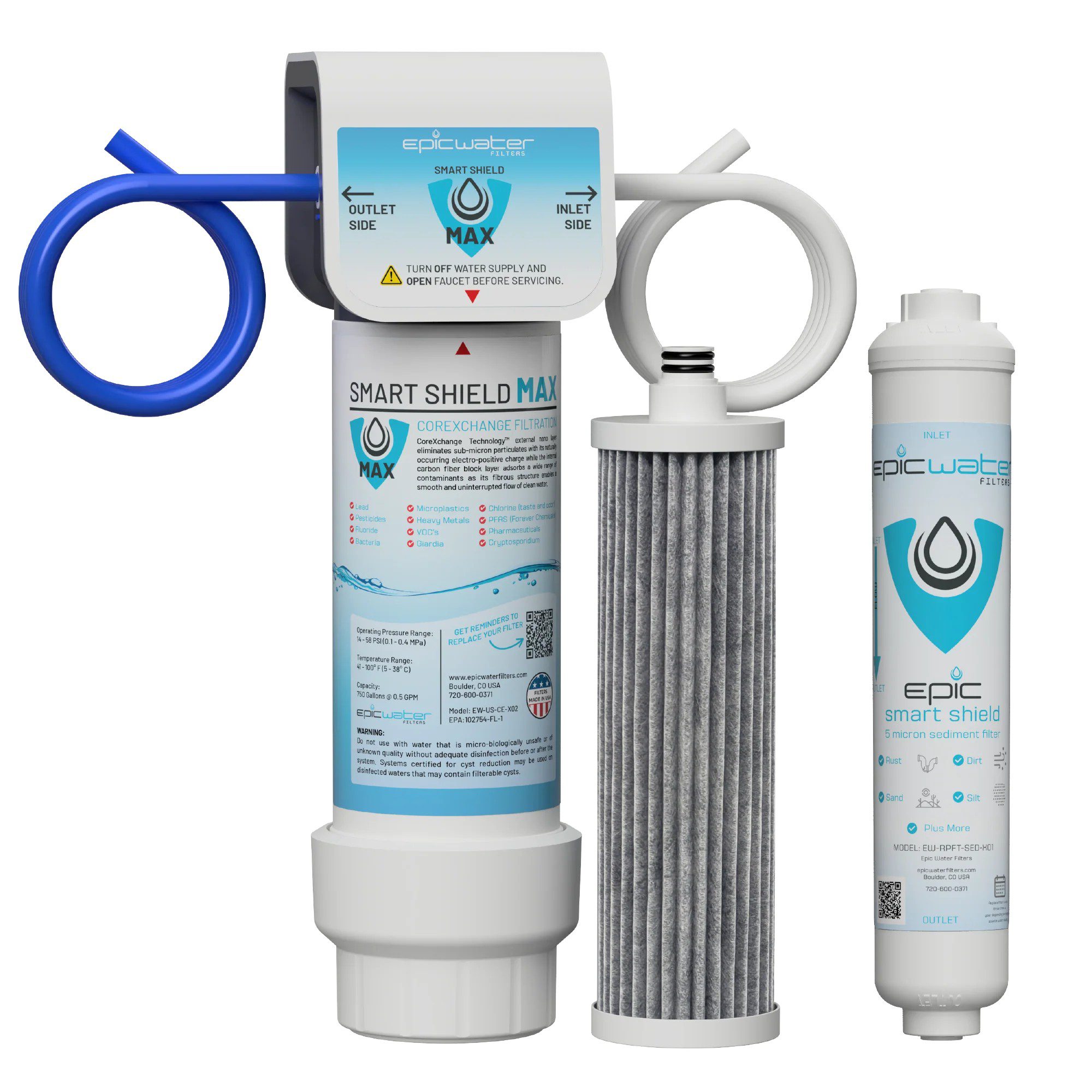
If you have started reading your water utility’s Consumer Confidence Report or watched another news report about “forever chemicals” and plastic particles turning up in tap and bottled water supplies, chances are good you are asking yourself: Which us the Best Water Filter to Remove PFAS and Microplastics?
Truth be told, PFAS and microplastics are distinct issues; most articles tend to treat them together but this should not be done. PFAS refers to chemical contaminants found in water sources like landfills or agriculture waste streams, while microplastics refers to physical particles. A filter that addresses one may not automatically address another – leading many people down a false sense of security when purchasing pitcher filters but still not addressing what was originally concerned them.
This guide addresses both issues separately, identifying certifications that really count, and offering an easy method for making purchasing decisions.
What PFAS Actually Is
PFAS, short for per- and polyfluoroalkyl substances, are synthetic chemicals produced since 1940 that have become ubiquitous in nonstick cookware, waterproof fabric, food packaging and firefighting foam – commonly referred to as “forever chemicals.” Their carbon-fluorine bonds barely break down over time in either the environment or human bodies, leading to their nickname as a family known as “Forever Chemicals.”
Due to PFAS dissolving at a molecular level, it cannot be removed with traditional filter systems like mesh or sediment filters. Filtration media such as activated carbon or reverse osmosis membranes that chemically or physically block small molecules should be utilized for effective removal.
At-risk households include military bases or airports (which historically used firefighting foam that contained PFAS), private wells near industrial sites or where their utility provider has reported detections in its water quality report.
What Are Microplastics and Nanoplastics
It accumulates from packaging materials used during their production processes or by decomposing plastic waste decomposition. This small subset often falls below one micron (often below 100 nanometers). Both more prevalent and harder to filter out.
This distinction matters more than most people realize; according to a 2024 Columbia University study, approximately 240,000 plastic particles per liter in bottled water consists of nanoplastic fragments rather than larger microplastic pieces, suggesting that selecting bottles over filtering your tap may not always be safer – simply because bottled water may introduce new sources of contamination.
A filter can honestly claim it “removes microplastics” while doing very little against nano plastics, simply because the pore size needed to stop a visible fragment is thousands of times larger than what’s needed to stop a nanoscale particle.
3 Best Water Filter to Remove PFAS and Microplastics
1. Aquasana Claryum 3-Stage Max Flow
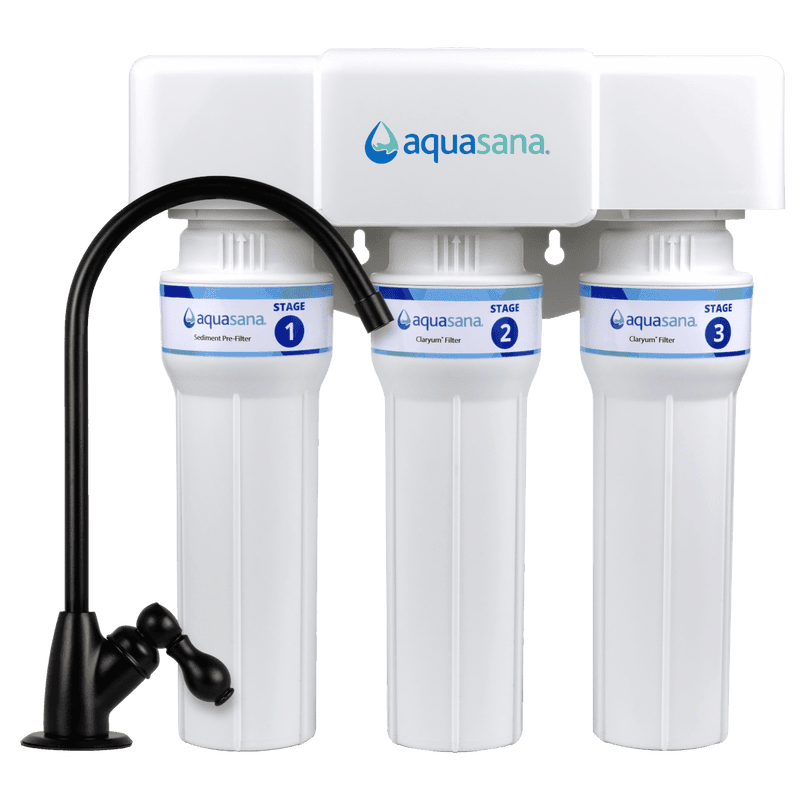
This water filter from Aquasana offers the best combination of protection from both PFAS and microplastic contaminants found in drinking water, targeting contaminants like lead, chlorine, pharmaceuticals and pharmaceuticals with its three-stage filtration system for effective yet cost-efficient reverse osmosis treatment without creating wastewater – while its under-sink design keeps its filter hidden while providing direct access to purified water through its dedicated faucet.
2. AquaTru Carafe Countertop Reverse Osmosis
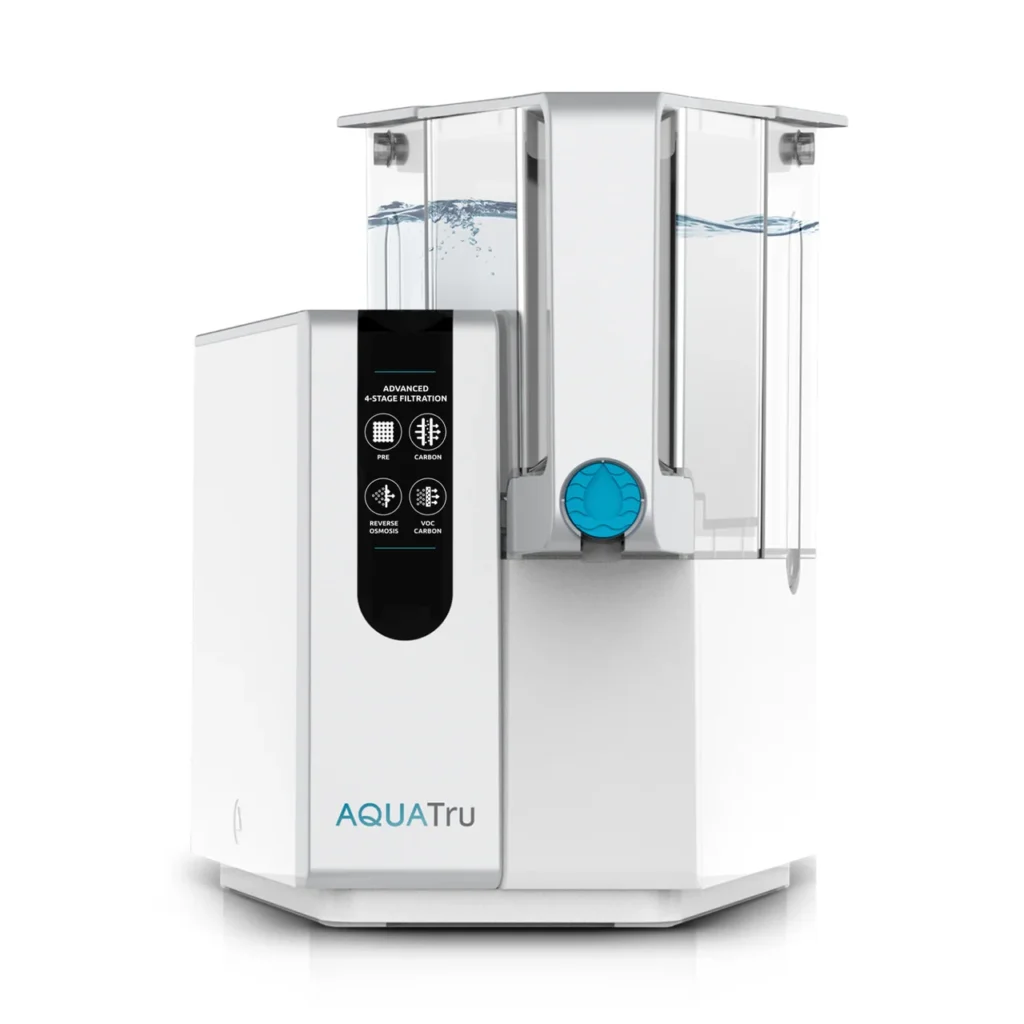
The AquaTru Carafe is an attractive countertop reverse osmosis system designed for wide contaminant reduction. Its multi-stage filtration process helps eliminate PFAS contaminants while reverse osmosis provides additional protection from microscopic particles, including microplastics. Plus, there’s no permanent plumbing needed – ideal for renters or kitchens with limited space – plus the carafe-style design makes producing purified drinking water when needed!
3. Clearly Filtered Water Pitcher
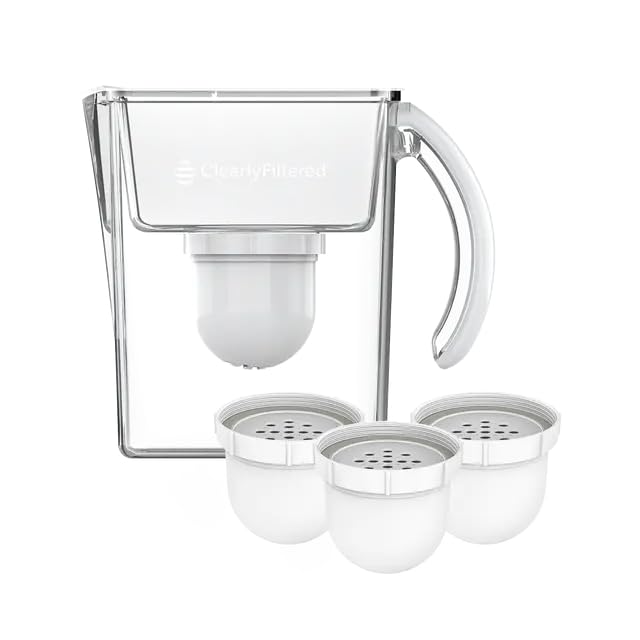
The Clearly Filtered Water Pitcher offers an easy, portable filtration solution. Its filter can effectively reduce PFAS, microplastics, heavy metals, chlorine and many other contaminants found in tap water; no plumbing or installation are necessary – making this ideal for apartments, offices and smaller households alike. Plus, its pitcher design makes storing and serving it throughout the day an easy feat!
Why One Filter Doesn’t Automatically Solve Both
This is the piece most buying guides skip. PFAS removal depends on chemical adsorption or membrane rejection of dissolved compounds. Microplastic and nanoplastic removal depends almost entirely on physical pore size. A filter engineered well for one doesn’t guarantee performance on the other.
The clearest way to think about it: decide which contaminant is your actual priority first, then choose a technology matched to that priority — or choose a multi-stage system that’s independently certified for both.
Reverse Osmosis: The Broadest Option
Reverse Osmosis (RO) systems filter water through a semi-permeable membrane with pores as small as 0.0001 micrometres – that’s small enough to block dissolved PFAS compounds and remove nearly all microplastic particles and nanoplastics from reaching our waterways.
RO is often the best single technology solution if you are seeking meaningful protection against both contaminants simultaneously. The trade-offs: RO systems produce some wastewater per gallon filtered (though newer tankless designs have narrowed this gap considerably), flow rate is slower than a basic tap, and the membrane needs periodic replacement to keep performing at its certified level.
Activated Carbon: Strong for PFAS, Limited for Microplastics
Certified activated carbon block filters – like those found in many pitchers, faucet filters, and under-sink systems — can be an excellent way of combatting PFAS when they feature an NSF/ANSI 53 or 58 listing for PFOA/PFOS reduction or “Total PFAS” reduction.
Carbon is less reliable against the smallest microplastic and virtually all nanoplastic particles, since its filtration mechanism relies more on chemical adsorption than fine physical screening. It will typically catch larger microplastic fragments, but don’t expect it to match RO on particle size exclusion.
What It Costs: Water Filter to remove PFAS and Microplastics
- Pricing varies by brand and stage count, so treat these as general ranges rather than fixed numbers:
- Certified pitcher filters: roughly 30–80, with cartridges replaced every 2–3 months
- Faucet-mount filters: roughly 30–100, cartridges every 3–4 months
- Under-sink RO systems: roughly 150–500, plus annual membrane and pre-filter costs
- Whole-house carbon systems: roughly 500–2,000+ installed, with media replacement every 1–5 years
- Countertop distillers: roughly 150–400, plus higher electricity use per gallon
Installation costs for RO or whole-house systems vary significantly by region and local labor rates; to obtain accurate quotes for installation from licensed plumbers or water treatment providers in your area. Don’t rely solely on national averages!
Common Mistakes
- Trusting Best Water Filter to Remove PFAS and Microplastics “NSF Certified” as an umbrella claim rather than inspecting each standard number and potential contamination issue individually may not be wise.
- Assuming every RO system automatically has a PFAS claim — it’s an optional, separately tested claim under NSF/ANSI 58
- Letting filter cartridges run past their rated life, which can quietly reduce PFAS reduction performance
- Assuming bottled water is inherently safer, when research suggests it can carry comparable or higher nanoplastic counts than filtered tap water
- Confusing NSF/ANSI 401 with a PFAS certification — it covers a separate contaminant list entirely
- Overlooking that a filter certified for PFOA/PFOS specifically may not address other PFAS compounds like PFHxS or GenX if they’re present in your water
Maintenance Matters More Than People Expect
A certified Best Water Filter to Remove PFAS and Microplastics only performs to its rated standard while the cartridge or membrane is within its service life. Carbon cartridges typically need replacement every 2–6 months, RO membranes every 2–3 years with pre-filters swapped every 6–12 months, and whole-house media on a schedule that depends heavily on household water usage. Running any of these past their rated capacity is one of the most common reasons people believe they’re protected when they’re actually not.
Conclusion: Best Water Filter to Remove PFAS and Microplastics
There’s no single “Best Water Filter to Remove PFAS and Microplastics” — there’s a Best Water Filter to Remove PFAS and Microplastics, your water source, and your household setup. If you want the broadest Best Water Filter to Remove PFAS and Microplastics protection, a multi-stage reverse osmosis system with a certified carbon pre-filter and a verified NSF/ANSI 58 PFAS listing is the strongest single answer available. If budget or plumbing access are the determining factors, a carbon filter certified NSF/ANSI 53 should do an adequate job at filtering PFAS contamination even though it won’t cover every particle of plastic pollution.
After making your selection, verify the certification in an NSF, WQA or IAPMO database; replace cartridges according to schedule; and keep an eye on how the EPA’s PFAS rule progresses up until 2026 – any filter today is only as useful as its maintenance and information behind it.
These information are gathered from different surveys, medical tests and tech giants like google, wikipedia and more. Our top priority is to provide you valuable information.
For More Details About Different Water Filters Click Here