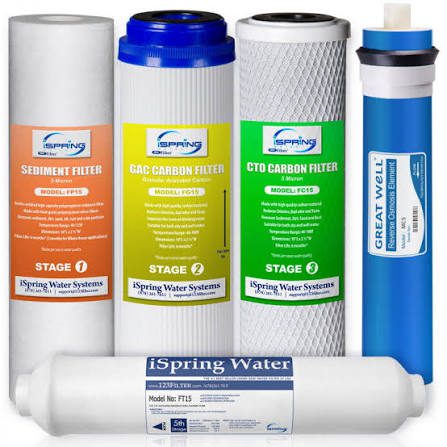
If your reverse osmosis water suddenly tastes a little off, or the faucet is trickling instead of flowing, your filters are probably trying to tell you something. reverse osmosis water filter replacement systems require relatively minimal upkeep compared to most household appliances; however, they’re not maintenance-free; therefore the difference between “clean, delicious water” and “why does this taste weird” usually boils down to one factor – reverse osmosis water filter replacement timing.
This guide details when and how often reverse osmosis water filter replacement should be replaced, how to recognize which reverse osmosis water filter replacement stage has failed, the costs involved with repairs and how you can complete this job yourself in under half an hour.
What Each Filter Stage Does
A typical under-sink reverse osmosis water filter replacement system runs water through three to six stages before it reaches your glass:
| Stage | Filter Type | Job | Typical Lifespan |
| 1 | Sediment filter | Strips out dirt, rust, and sand | 6–12 months |
| 2 | Carbon block (pre-filter) | Removes chlorine and chloramine | 6–12 months |
| 3 | RO membrane | Removes dissolved solids, heavy metals, fluoride | 2–3 years |
| 4 | Post-carbon filter | Final taste polish | 6–12 months |
| 5 | Remineralization filter (optional) | Adds minerals back for taste and pH | 6–12 months |
The sediment and carbon stages exist partly to protect the membrane. That’s why they wear out faster — they’re the ones absorbing the brunt of whatever’s in your source water, standing between raw tap water and the far more expensive membrane behind them.
This is also where most people go wrong. Skipping a $15 carbon filter change doesn’t save money — it just means chlorine and sediment start hitting the membrane directly, and that’s how a $50 part turns into a $150 problem eighteen months early.
Signs Your reverse osmosis water filter replacement Needs Replacing
- Slower flow from the faucet — usually a clogged sediment or carbon stage restricting flow
- Chlorine smell or off taste returning — almost always the carbon filter, not the membrane
- A metallic or plasticky taste — can point to an exhausted membrane or an old storage tank
- Rising TDS readings — a cheap handheld TDS meter is the most objective early warning you can get; track your baseline and watch for drift
- Storage tank taking longer to refill — flow restriction somewhere upstream
- Visible discoloration in the sediment housing — you’ll see it the moment you open the housing
Replacing an reverse osmosis water filter replacement does not need to be complicated or an ordeal; all it requires is knowing what signs to watch for and knowing what actions need to be taken when needed. These are the tells:
Here’s the diagnostic shortcut most guides skip: taste and odor problems are almost always the carbon stage, not the membrane. The membrane handles dissolved solids and heavy metals — it doesn’t do much for chlorine taste. So if your water suddenly tastes like a swimming pool, replace the cheaper carbon filter first before assuming you need a new membrane.
Why This Actually Matters
It’s easy to treat filter changes as a “someday” chore, but there’s more riding on it than taste:
- Bacterial growth. A carbon filter that’s been saturated for months past its useful life can become a place where bacteria multiply rather than get filtered out.
- Membrane protection. Every month you run past-due pre-filters is a month the membrane is absorbing damage it wasn’t designed to take on directly.
- System efficiency. Clogged filters restrict flow and, on tankless systems with a booster pump, make the pump work harder than it should.
- Long-term cost. Preventive filter changes are cheap. Emergency membrane replacement because pre-filters were neglected for two years is not.
None of this requires alarm — reverse osmosis water filter replacement systems are genuinely reliable when maintained on schedule. It just means “on schedule” is doing real work here, not just a suggestion on a box.
3 Best reverse osmosis water filter replacement
Express Water 3-Year Replacement Filter Set (22 Filters)
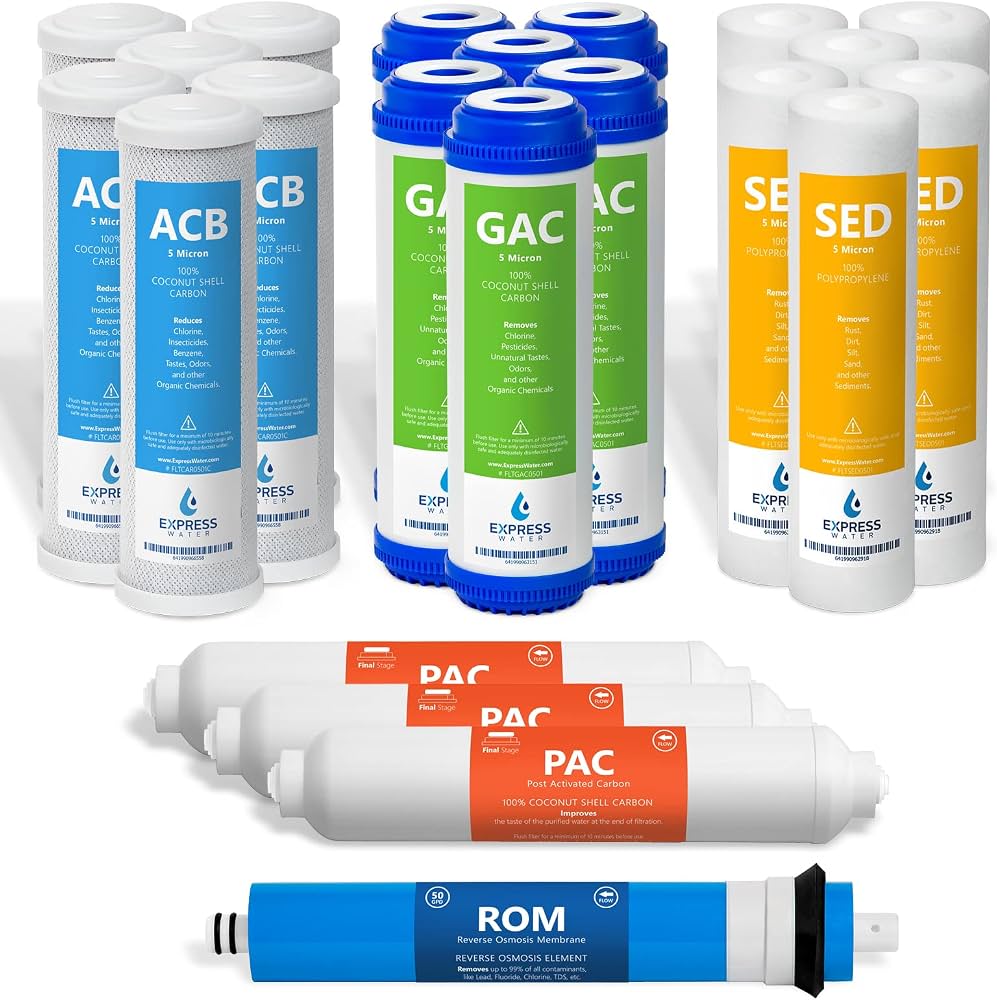
This is the best all-around pick for most people. At around $85-$95 for three years of sediment, carbon, and membrane replacements for most generic 5-stage systems, it offers excellent value if you want to stock up and forget about it for some time.
With its broad compatibility design, this kit also makes an ideal solution if you’re uncertain which brand of system yours may be.
APEC Complete Filter Set (Essence 6-Stage)
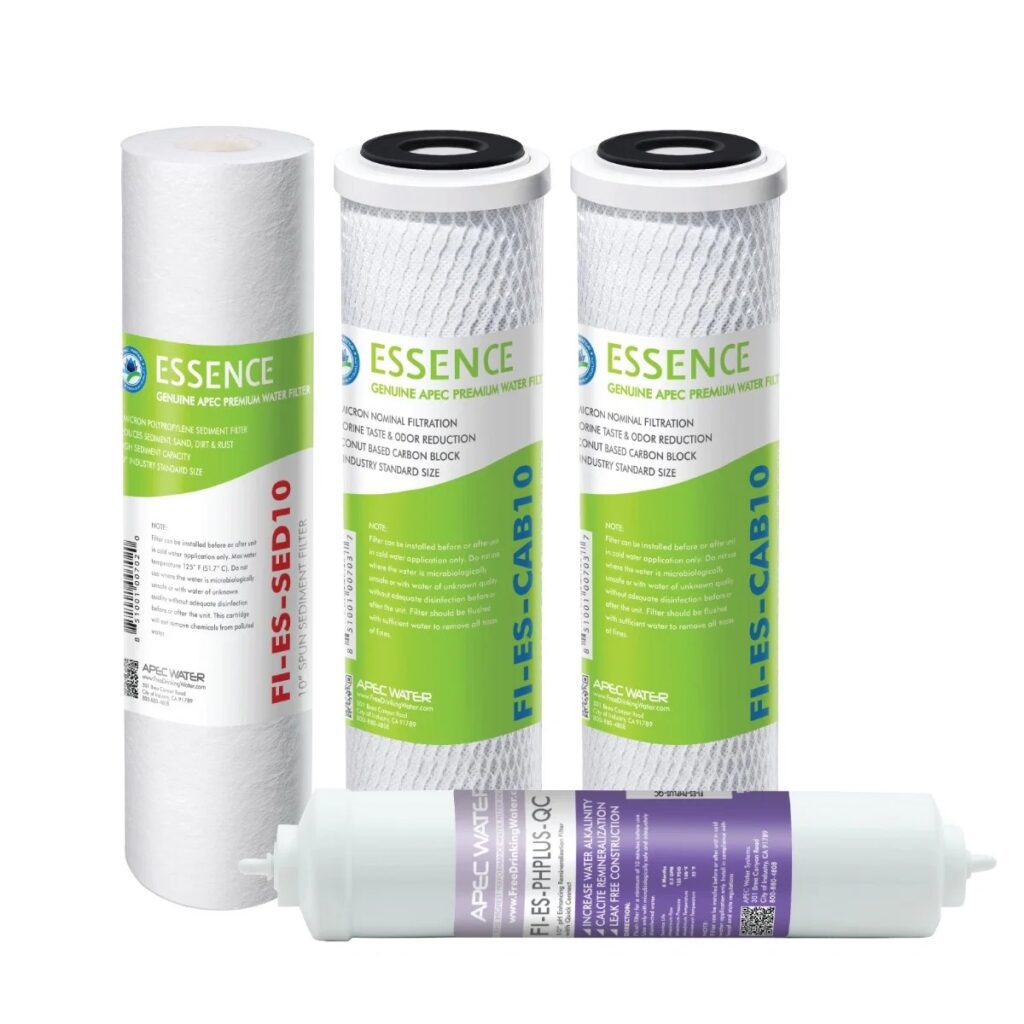
If you specifically own an APEC Essence system, this is the smarter choice even though it covers less time than the Express Water set. It’s genuine OEM, priced around $70–$90, and preserves your system’s warranty — something a universal-fit set can’t guarantee.
If you plan to keep the system for an extended period, an increased annual cost might be worth it.
Watts Premier 7-Pack Standard Filter Set
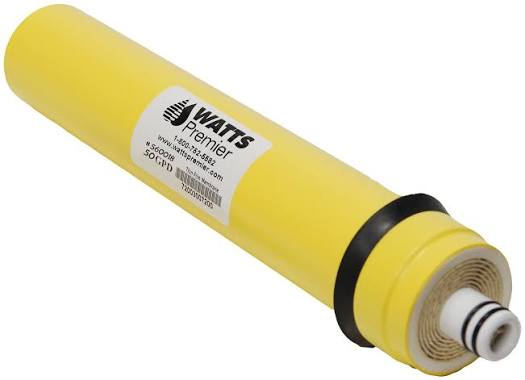
If budget is the main driver rather than convenience, this is the cheapest way to refresh your sediment and carbon stages, running $40–$60. It’s a partial set covering roughly 6–12 months rather than a multi-year supply, so treat it as an affordable stopgap rather than a full refresh.
It makes the most sense if your goal is simply getting through your next filter change with minimal spending up-front.
DIY vs. Professional Replacement:
Most homeowners can do it themselves. The question is really about comfort level and system type, not skill.
| Factor | DIY | Professional Service |
| Cost | $15–$120 (parts only) | $80–$250 (parts + labor) |
| Time | 15–30 minutes | Scheduled appointment |
| Skill required | Basic — comparable to changing an air filter | None |
| Best for | Standard under-sink systems, quick-change cartridges | Whole-house systems, warranty-sensitive installs, first-time owners |
| Risk | Small chance of a loose-fitting leak | Minimal, typically warrantied |
A useful rule of thumb: if you’re comfortable unclogging a drain trap or swapping a furnace filter, you’re comfortable replacing reverse osmosis water filter replacement cartridges. The membrane housing is only slightly more involved than the pre-filters, and most systems now use tool-free, quick-change housings specifically to make this a non-event.
Where professional service earns its cost is less about difficulty and more about convenience and warranty protection — some manufacturers require certified installation to preserve coverage, and landlords or property managers often prefer a documented service record over a DIY job.
Step-by-Step: How to Replace an reverse osmosis water filter replacement
- Shut off the water supply feeding the RO system, along with the valve on the storage tank.
- Relieve pressure by opening the RO faucet and letting it run until it stops.
- Close the feed water valve on the cold water line going into the system.
- Remove the filter housing — twist counterclockwise, or simply unscrew by hand on quick-change models.
- Discard an old cartridge and clean its housing to maintain cleanliness, checking any O-ring seals for cracks or debris while inspecting them for possible repairs.
- Insert the new filter, matching it to the correct stage.
- Lubricate O-rings lightly with food-grade silicone grease — never petroleum-based grease as this will degrade rubber.
- Reassemble using hand tightening before giving a quarter turn with housing wrench; be careful not to overtighten as overdoing it can crack threads in housing housings.
- Turn back the water supply slowly and examine every fitting for leaks.
- Flush out the system by filling and draining through a faucet two or three times prior to drinking – new carbon filters produce fine carbon dust that needs clearing away before drinking can begin.
Common Mistakes to Avoid
- Overtightening the housing, which cracks the plastic threads
- Skipping the post-replacement flush, leaving carbon dust in your first few glasses
- Utilizing petroleum-based lubricants instead of food grade silicone on O-rings could potentially compromise their integrity and compromise product performance.
- Failure to reset the filter-life timer, which then resets your entire schedule back to unknown, could be disastrous.
- Buying generic filters without checking micron rating or dimensions first
Maintaining Your System Between Replacements
A few small habits stretch the life of every reverse osmosis water filter replacement and catch problems before they become expensive:
- Check TDS monthly and compare it to your baseline reading
- Sanitize the storage tank annually with a food-safe sanitizing solution
- Inspect under-sink connections periodically for slow leaks
- Keep a simple log — date, stage replaced, TDS reading — so you’re never guessing where you stand
Are There Any Alternate Solutions Worth Exploring?
reverse osmosis water filter replacement isn’t your only option, and it is wise to explore when another may better suit your household:
- Whole-house sediment and carbon filtration for households that don’t need point-of-use RO purity everywhere
- UV purification add-ons in areas with microbial concerns
- Tankless RO systems with built-in filter-life monitoring, which take the guesswork out of timing
- Water softener + RO combinations for hard-water regions, reducing how hard the sediment stage has to work
None of these replace reverse osmosis water filter replacement outright — reverse osmosis water filter replacement complements depending on your water source and household size.
Conclusion: Reverse Osmosis Water Filter Replacement
reverse osmosis water filter replacement isn’t complicated, but it is easy to put off — and putting it off is really the only way it becomes expensive. Keep the sediment and carbon stages on a 6–12 month rhythm, give the membrane its 2–3 years, and pay attention to the early signals: slower flow, changing taste, a TDS reading that’s drifting from baseline.
Whether you handle it yourself with a $20 cartridge kit or bring in a local technician for a full service visit, the goal is the same — catch it on schedule, and you’ll never have to think about it as a “problem,” just routine upkeep.
These information are gathered from different surveys, medical tests and tech giants like google, wikipedia and more. Our top priority is to provide you valuable information.
For More Details About Different Water Filters Click Here