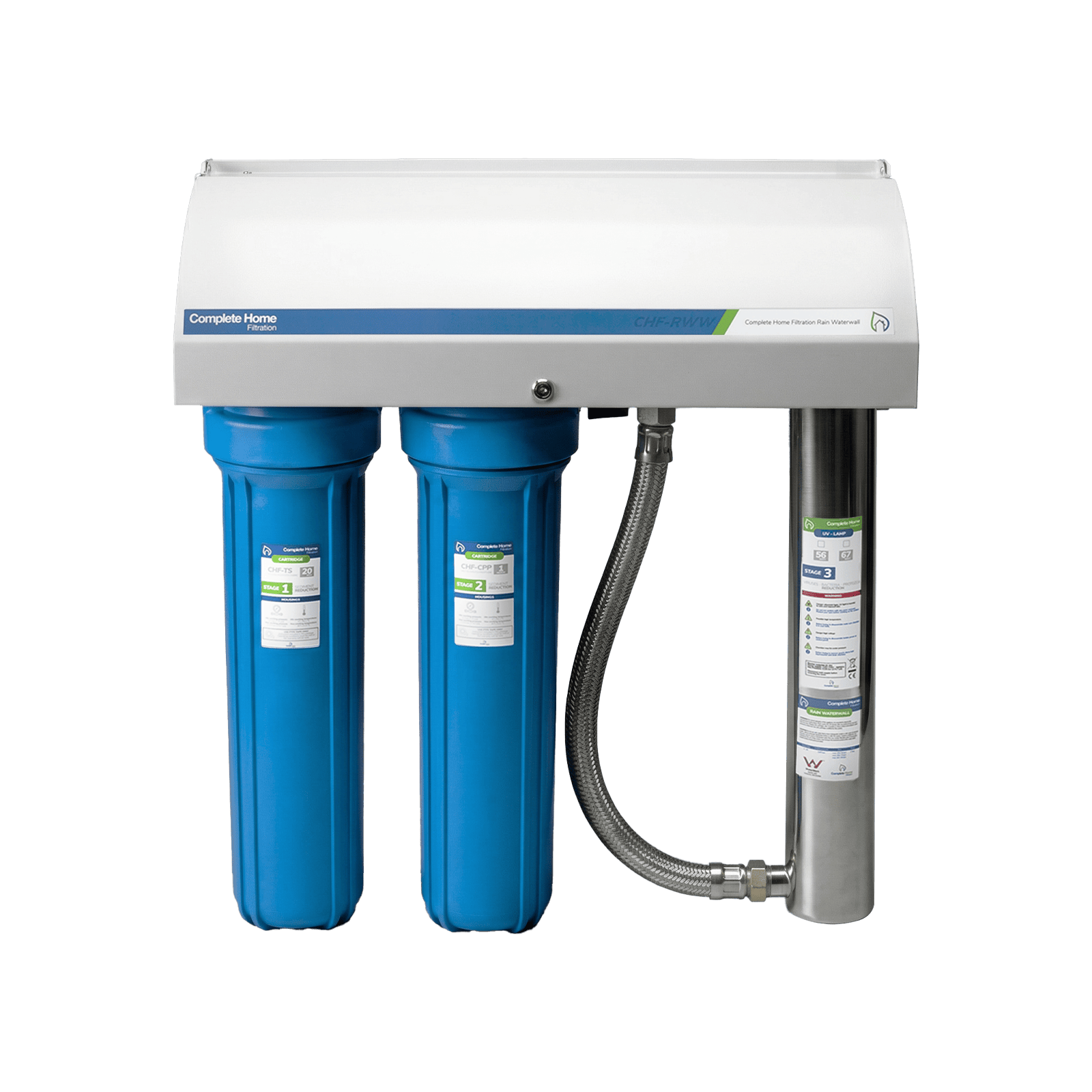
Rain appears clean and neat falling out of the skies. When it rolls over a roof, and then into a drain that it’s carrying dust, bird droppings, pollen decomposing leaves, and whatever remains are accumulating on the roof. The rain water filtration system converts the runoff into something that you can actually use to water your garden, do laundry or, in certain instances, even the tap in your kitchen.
In essence the rain water filtration system is a series of filters, screens and treatment stages that are placed between the downspout of your roof and the point where the water is supposed to end up. The typical rain water filtration system setup includes a pre-filter or a first-flush diverter and a sediment filter and in the event that the water is to be consumed or used indoors carbon filtration and disinfection. The exact configuration of a rain water filtration system depends on the purpose you intend to use the water for.
The One Distinction That Changes Everything
Most confusion around rain water filtration system comes down to a single question nobody asks early enough: is this water going to touch your mouth, or just your garden?
Non-potable use — irrigation, car washing, toilet flushing — needs a fraction of the filtration that potable (drinking-grade) water requires. A lot of guides online blur this line, either assuming you’re building a full drinking-water system or ignoring the possibility entirely. That’s the wrong starting point. Everything else in this guide — cost, components, maintenance — branches off this one decision.
Why It’s Worth Doing Properly
Skipping or under-building filtration doesn’t just risk water quality. It shortens the life of everything downstream — pumps clog with sediment, irrigation drippers get blocked, and if you’re aiming for drinking water, inadequate treatment is a genuine health risk, not a hypothetical one. Bacterial contamination from bird droppings or decomposing organic matter isn’t something you can see or smell.
On the upside, a properly filtered rain water filtration system reduces dependence on municipal or well water — a real advantage in drought-prone regions, off-grid properties, or anywhere water costs or restrictions are climbing. In parts of South Asia, rain water filtration system is also used for a different purpose entirely: recharging groundwater and borewells rather than storing water for direct use, a use case that’s common in commercial and agricultural setups but rarely mentioned in typical homeowner guides.
Who Actually Needs One Rain Water Filtration System
- Homeowners in water-restricted or drought-affected areas wanting a backup irrigation source
- Off-grid or rural properties without reliable municipal access
- Gardeners and small farms protecting drip irrigation systems from sediment damage
- Builders working toward green certifications that reward water reuse
- Households building emergency water reserves
If you’re renting, live in an apartment, or your local water authority restricts private catchment, this likely isn’t for you — check local rules before buying anything.
How Rain water Filtration System Actually Works
The process of rain water filtration system is sequential, and the order matters more than most people realize. Running things out of order — say, disinfecting before removing sediment — makes UV treatment far less effective, since suspended particles can shield bacteria from the light.
Catchment — rain lands on the roof and flows into gutters
Screening — a mesh screen (commonly 1/16-inch) at the gutter or downspout blocks leaves and larger debris
First-flush diversion — the dirtiest initial runoff, usually the first few gallons per storm, is diverted away from storage
Storage entry — cleaner water flows into the tank through a calming inlet, which reduces disturbance of settled sediment
Sediment filtration — water drawn from the tank passes through a cartridge filter, generally removing particles down to 20–50 microns, sometimes finer
Carbon filtration — removes odor, color, and some dissolved organics
Disinfection — UV light or chlorination inactivates bacteria, viruses, and protozoa; this stage is only necessary for potable use
Delivery — a pump moves treated water to its point of use, with a backflow preventer if the system connects anywhere near a municipal line
3 Best Rain water filtration systems
1. 3M Aqua-Pure AP904
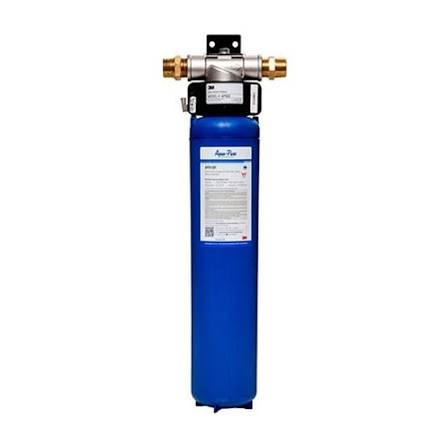
The 3M Aqua-Pure AP904 is a high-flow whole-house filtration system that can be used as part of a rainwater treatment setup. It helps reduce sediment, chlorine taste, and odor while maintaining good water flow throughout the home. Its compact design makes installation easier than many larger filtration systems. For harvested rainwater, it should be combined with suitable pre-filtration and disinfection. Its durable construction makes it a practical option for long-term household water filtration.
2. iSpring WGB32B 3-Stage
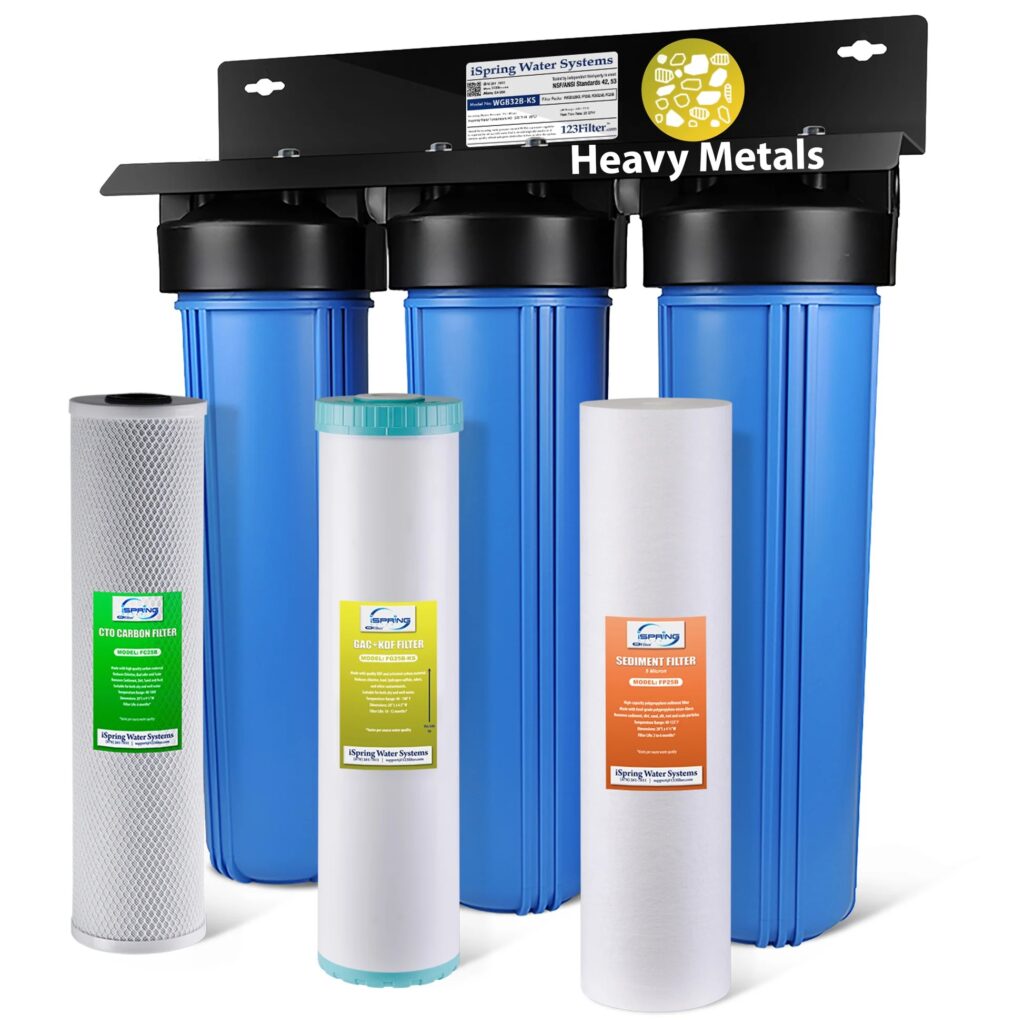
The iSpring WGB32B is a three-stage whole-house filtration system that uses sediment and carbon filtration to improve water quality. It can help remove suspended particles, unpleasant tastes, and odors from collected rainwater when properly pre-treated. The three-stage design provides more comprehensive filtration than a single filter. For drinking water, additional UV disinfection or another suitable purification method may be needed. Its replaceable filter cartridges make routine maintenance and filter changes relatively convenient.
3. Aquasana Rhino EQ-1000
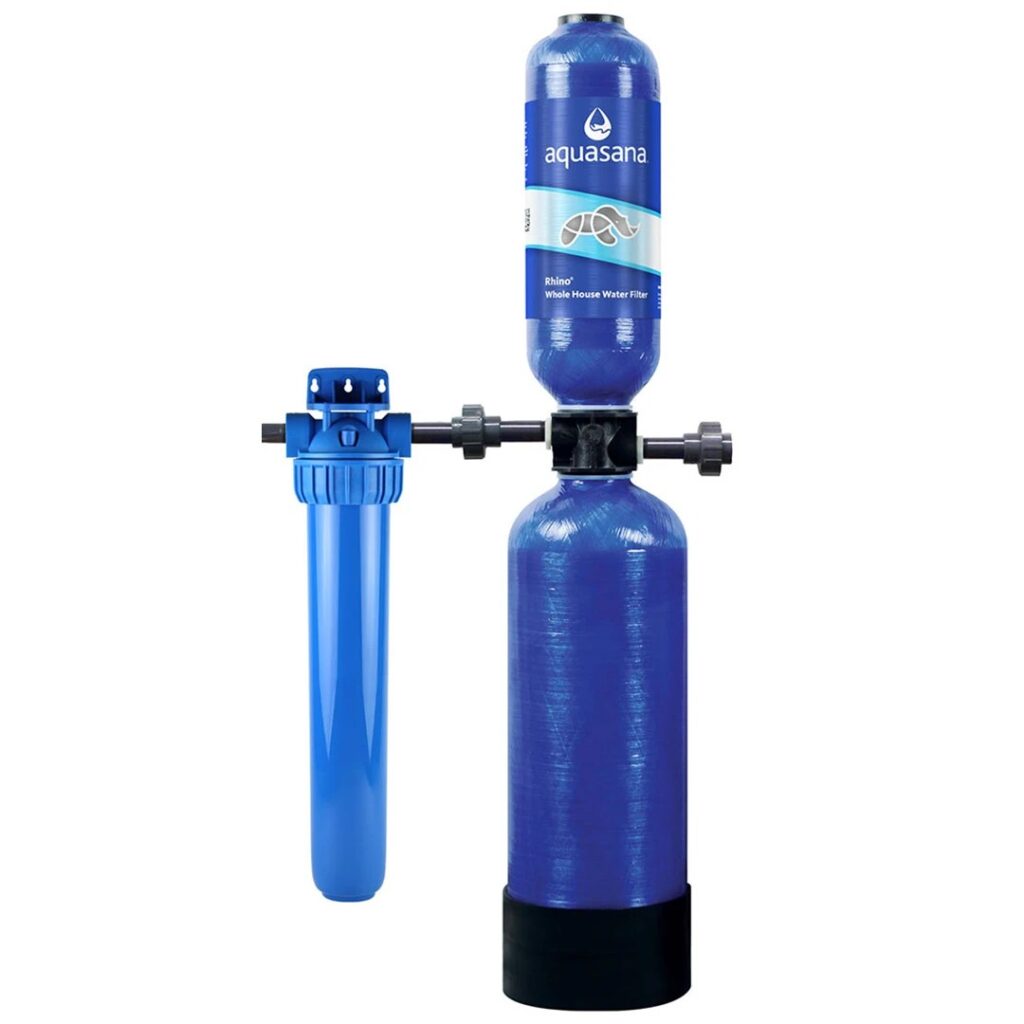
The Aquasana Rhino EQ-1000 is a high-capacity whole-house water filtration system designed to treat water for household use. Its filtration media can help reduce various contaminants while improving taste and odor. It can serve as a treatment stage in a larger rainwater harvesting system. A sediment pre-filter and UV disinfection are recommended when the collected rainwater will be used for drinking. Its large-capacity design makes it suitable for households that need a consistent supply of filtered water.
The Standards That Actually Matter
If a system is going anywhere near drinking water, a handful of certifications separate a properly built setup from a guess:
- NSF/ANSI 53 covers filtration for health-related contaminants
- NSF/ANSI 55 governs UV disinfection systems (Class A systems are rated for microbiologically unsafe water)
- NSF/ANSI 58 applies to reverse osmosis systems
- NSF/ANSI 61 certifies that tanks, pipes, and fittings are safe for water contact
- ARCSA (American Rainwater Catchment Systems Association) accredits installers in the U.S.
- BS 8515 governs rainwater harvesting system design in the UK, typically for non-potable applications
Local plumbing codes vary significantly by state and country, and some require permits or inspections for any indoor rainwater use. Checking this before buying components saves a lot of rework later.
DIY or Call Someone In?
| Situation | DIY Makes Sense | Bring In a Professional |
| Intended use | Garden, outdoor watering | Indoor or drinking water |
| System complexity | Screen + diverter + single tank | Multi-stage, UV, or connected plumbing |
| Local code | No permit required | Permit or inspection required |
| Risk level | Low stakes | Health-related consequences |
For anything touching drinking water, working with an ARCSA-accredited installer (or local equivalent) isn’t just a nice-to-have — it’s how you avoid a system that looks complete but isn’t actually safe.
Mistakes That Cause Most of the Problems
- Skipping the first-flush diverter, which overloads every filter downstream
- Using standard drain-waste-vent (DWV) PVC instead of NSF/ANSI 61-certified pipe for potable lines
- Placing the tank intake at the bottom, pulling in settled sediment instead of using a floating intake
- Treating UV lamp replacement as optional once the light still turns on
- Choosing a clear or light-colored tank, which invites algae growth
- Not checking local code before installing anything indoors
If Full Filtration Isn’t the Right Fit
- Municipal water remains the simplest option if space, budget, or need don’t justify a secondary system
- Well water filtration suits properties with groundwater access and the right permits
- Greywater recycling reuses household wastewater instead of, or alongside, rainwater
- Partial systems — rainwater for irrigation only, municipal or bottled water for drinking — offer a lower-cost middle ground
Conclusion: Rain Water Filtration System
A rain water filtration system isn’t one product — it’s a chain, and the chain is only as strong as its weakest link. The right rain water filtration system setup depends entirely on what the water is for: a $50 diverter is plenty for garden watering, while drinking water demands a certified, multi-stage rain water filtration system with real disinfection and ongoing testing.
Start by deciding potable or non-potable, check what your local code requires, then size the system to your roof and rainfall rather than a generic default. Get that sequence right, and the rest — cost, components, maintenance — falls into place.
These information are gathered from different surveys, medical tests and tech giants like google, wikipedia and more. Our top priority is to provide you valuable information.
For More Details About Different Water Filters Click Here